


Learners Live

Tariff Q&A with NAED Director of Government Relations, Bud DeFlaviis

tED magazine talks with NAED’s Director of Government Relations, Bud DeFlaviis, about why distributors usually do not have a direct claim to IEEPA tariff refunds, why unwinding tariff-driven price increases is so difficult, and how distributors can explain that reality to customers. tED Magazine: Bud, what is the biggest misunderstanding in the market right now about tariff refunds? Bud DeFlaviis: We hear a lot that since the IEEPA tariffs were struck down, everyone who absorbed higher prices will easily get money back. That’s not how this works. The Supreme Court’s February 20, 2026 ruling held that IEEPA did not authorize the broad reciprocal and drug-trafficking tariffs, and CBP (Customs and Border Protection) has launched its refund process using a tool called CAPE (Consolidated Administration and Processing of Entries). But that government refund process is built around the importer of record — the party that paid Customs — not every company farther down the supply chain that later paid higher prices.  tED Magazine: So who actually has the legal claim to a refund? Bud: In most cases, the importer of record does.  tED Magazine: Are the tariffs gone? Are they coming back? Bud: The IEEPA tariffs are gone. However, other tariffs imposed under the Trump administration remain in effect and the President has signaled that he wants to continue to find mechanisms to impose additional tariffs. Tariff Q&A With NAED Director of Government Relations, Bud DeFlaviis – tEDmag
NAED Washington Wire: Information and Updates on IEEPA Tariff Refunds

The Supreme Court’s February 2026 decision striking down broad IEEPA tariffs has triggered a complex refund process, now centered at the CIT and being implemented by the CBP. The main action items are straightforward. Importers should track liquidation dates, confirm ACH and ACE enrollment, preserve all entry and payment records, and review any contracts that may affect refund sharing. Wholesalers and distributors should check whether their pricing or surcharge provisions address tariff reimbursement. All parties should continue monitoring CBP’s rollout, the CIT’s next orders, and any appeal activity that could affect the scope or timing of refunds. For businesses, the key distinction is between legal entitlement and commercial recovery. Importers of record are positioned to receive refunds directly, provided they maintain proper documentation and system readiness. In contrast, wholesalers and distributors must rely on contract terms to determine whether they share in any recovered duties, making careful review of agreements essential. NAED – Washington Wire

Why Haven’t Tariffs Boosted Inflation? This Theory Is Gaining Traction by Konrad Putzier

New research suggests the actual tariff rates are well below what economists have suspected. The highest tariffs in almost a century haven’t caused inflation to surge. The phenomenon has puzzled economists, some of whom suspect that companies have so far simply been reluctant to pass along the extra coststo their customers. But another argument for the limited impact is gaining traction: that tariffs being paid by importers are lower than advertised. In a new study, Barclays economists went through census data to see what tariffs importers actually paid in May. They found that the weighted-average tariff rate—the average of all tariffs, adjusted for import volume from each country—that month was around 9%. That number is well below the 12% rate that they had previously estimated based on White House announcements, and far less than what some others have estimated. The reason is that more than half of U.S. imports were duty-free and because many U.S. companies and consumers bought less from countries with higher levies, particularly China.  Ultimately, Barclays expects weighted-average tariffs to end up at around 15%, up from a current 10% and 2.5% last year.  Why Haven’t Tariffs Boosted Inflation? This Theory Is Gaining Traction – WSJ

Here’s a little-known fact about the MLB World Series

First, let me congratulate the Milwaukee Brewers on their first World Series Championship. Well played the entire 2026 season, 103 wins was the best.… My new team in the NL!

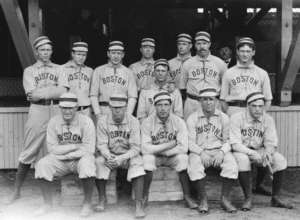
The 1903 World Series was the first modern World Series, and the Boston Americans (now the Red Sox) defeated the Pittsburgh Pirates 5 games to 3. Do you believe it………….a team from Boston actually won the first World Series…….  The surprising twist: The World Series wasn’t played at all in 1904! The NY Giants refused to participate because their owner, John T. Brush, considered the championship unnecessary. The Series returned in 1905, when those NY Giants won. So, baseball’s biggest annual event actually skipped its second year! The team from Boston (Americans, then Red Sox) have a World Series record of 9 wins and 4 losses in championship appearances, for a 69.2% championship success rate. Their nine championships came in 1903, 1912, 1915, 1916, 1918, 2004, 2007, 2013 and 2018. Sad fact: The team from Bean Town waited 86 years between championships, from 1918 until its dramatic victory in 2004 over the St. Louis Cardinals (4-0), when the Red Sox ended the famous Curse of the Bambino……just sayin!