


Learners Live

Canada-U.S. Oil Pipeline Close to Reaching Commitment Requirement

The Alberta-to-Wyoming pipeline, proposed by Canadian ‌pipeline company South Bow Corp and its U.S. partner Bridger Pipeline, could increase Canada’s crude exports to the U.S. by more than 12 per cent if it goes ahead, bringing much-needed pipeline takeaway capacity to Canada. While the new proposal takes ​a different route through the U.S. than the canceled Keystone XL, South Bow’s portion would revive about 150 km (93 miles) on the Canadian side that has already been built and ​is sitting idle. That pipe would then connect to Bridger’s proposed pipeline in Montana and extend about 645 miles to Guernsey, Wyoming. Canada-U.S. oil pipeline close to reaching requirement

Keystone Solutions for Data Center Lighting

With rising demand from AI, cloud hosting, co-location facilities, and edge-network buildouts, these facilities operate 24/7 and draw significant power. While most of that energy feeds servers and HVAC systems, data center lighting still plays a crucial role in uptime, safety, and efficiency. Choosing the right fixtures isn’t just a matter of visibility—it’s a matter of performance and sustainability. Lighting strategies in data center environments must support high performance and minimal disruption: XFit Linear High Bays with OpticSwap™
  • High-temperature durability in hot-aisle conditions and continuous-run environments
  • Vertical and horizontal illumination so techs can read rack labels and navigate aisles safely
  • Smart controls, zoning, and automation to prevent lighting empty rooms for half the day
  • Retrofit-friendly designs to upgrade legacy lighting without scheduled downtime – especially since the center needs to continue operation through all maintenance activities.

Keystone offers other solutions engineered for the specific demands of data center lighting.

Solutions for Data Center Lighting | Keystone Technologies

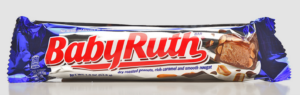
The Creator of Baby Ruth Actually Sued Babe Ruth –The Baby Ruth candy bar was created by the Curtiss Candy Company in 1920 — the same year that baseball legend Babe Ruth hit a then-record 54 home runs. But the Great Bambino was irked that the company was selling a candy bar with such a similar name to his own without offering him any royalties. Rather than take the Curtiss Candy Company to court, the Sultan of Swat decided to make his own candy bar, and in 1926 he debuted Ruth’s Home Run bar. The Curtiss Candy Company responded by turning the tables and taking Ruth to court. They accused the slugger of trying to steal their trademark and capitalize on the success of their brand. In a 1931 deposition, Curtiss founder Otto Schnering insisted the candy was named after “Baby Ruth” Cleveland — the daughter of President Grover Cleveland.  He also attested that the company came up with the name in 1919 before the baseball player had become a household name and that the name was merely coincidental. While the validity of those claims is disputed to this day, the court nonetheless ruled in favor of the candy company, forcing Ruth to end his foray into the world of candy.