Twenty years from now you will be more disappointed by the things that you didn’t do than by the ones you did do. So throw off the bowlines. Sail away from the safe harbor. Catch the trade winds in your sails. Explore. Dream. Discover. Mark Twain
Learners possess certain attributes that distinguish them from the learned. They anticipate rather than react to change. Some call that vision. They become essential facilitators of change within their altered environment. They can skillfully communicate the new and technically esoteric with a clarity that leads to understanding and advocacy. Organizations that don’t value learning and the change that springs from learning will struggle to stay relevant in this fast-paced ever-changing marketplace. Learners influence change in an organization and, in turn, their leaders allow people to adapt to that change. Now AI provides deep learning…
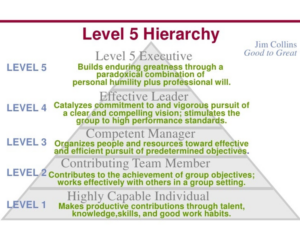
Author and teacher James C. Collins built a pyramid when he wrote: Good to Great: Why Some Companies Make the Leap… and Others Don’t. The book was a bestseller, selling four million copies and going far beyond the traditional audience of business books. The book was published on October 16, 2001. Jim Collins found that a common characteristic of the great companies was effectively moving highly competent individuals through the process to great leadership. Specifically, he defined “Level 5 Hierarchy” as a key to moving from Good to Great.
As an Educator, my ambition here is to express my view that education, the learning process, is not a onetime event but rather, something you do all the time. Sounds a lot like Vince Lombardi when he talked about doing things right, not once in a while but all the time, right? Winning is everything…… remember that?
College students are there to learn, to prepare for a life of success in a leadership role with an organization of their instigation or one of their choosing. Personal growth in the business world. So who are you?
Highly Competent Individual
Level One: Jim Collins says you are: A highly capable individual who makes productive contributions through talent, knowledge, skills and good work habits. In every environment, in every company, in every department, in every office, in every classroom, on every team, there are inequities. Men and women come in all sizes, all levels of acumen, all degrees of competency, skill and talent……..THE UNEQUALS. Competent but unequal…
A Contributing Team Member
Level Two: A Contributing Team Member that contributes to the achievement of group objectives; works effectively with others in a group setting. The window here is open to the competent individual to move on and to show what kind of team player they are. Level 2 asks how well you work with others, what kind of team player you are. How well you contribute in a team environment will determine whether you progress to Level 3.
Competent Manager
Level Three: One that organizes people and resources toward effective and efficient pursuit of predetermined objectives. Does things right… Business is a team sport. Big corporations have big teams. Competing and winning is determined by how well the team performs. Sure the high performers can make a disproportionate contribution but so what, they most likely get the recognition, get the rewards, make the big bucks…..and they should. But you win as a team and you lose as a team. Now that’s not an original thought but athletes live by it and you should too. Now let’s talk about moving into executive management………responsible for the development and growth of others.
Effective Leader
Level Four:: Catalyzes commitment to and vigorous pursuit of a clear and compelling vision; stimulates the group to high performance standards.
Management is doing things right; leadership is doing the right things. Peter F. Drucker
I like this definition best: Effective Management is a problem-solving and decision-making process of effectively achieving organizational objectives through the efficient use of resources in an ever-changing environment.
- What Is… Effective Leaders are aware of what is happening around them.
- What Will Be… Effective Leaders understand that things change.
- What To Do… Effective Leaders make things happen…they are doers.
From Effective Leader to Inspirational Leadership
Level Five: Builds enduring greatness through a paradoxical combination of personal humility plus professional will. Jim Collins in his book Good to Great calls this: Executive Leadership but I feel it is bigger than that. I like Inspirational Leadership…
Leaders are skilled in the two most critical aspects of running a successful business: solving problems and effective decision-making. Let’s start with a certainty: Problems Are A Given. If you go thru life and do not have any problems to deal with, then we call that fantasy land…. wake up! Defining the problem, in most cases, is the easy part. It’s the solution that’s hard. That requires good decision-making skills from knowledgeable / competent managers. Competent managed companies have crucial advantages in common, they attract more talented employees, grow faster and are more profitable. This only happens when there is a profound commitment from the top. Management and leadership aren’t the same thing however, but they do share common goals: inspiring others to do more and be better. When they lead by example, they start the process of becoming an effective leader and then maybe an inspirational leader. How many do you know?
I personally have had a wonderful career in the lighting business and am very lucky to know and work for some outstanding inspirational leaders. Bill Cramer and John Max during my Westinghouse years; Bob Cappalli, Jack Briody and Steve Tumminello during my Philips years………….But now the days are short, I’m in the autumn of the year, it was a very good year….many good years. God bless them and my most appreciative gratitude that you came into my life and inspired me to do my best. Still working to earn what you taught me.
Before you are a leader, success is all about growing yourself. When you become a leader, success is all about growing others. Jack Welch




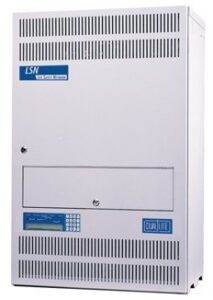 Centralized emergency lighting and power back-up solution with options to minimize maintenance requirements and optimize emergency lighting performance during outages.
 The company is the first to charge for rides in its autonomous vehicle without a steering wheel, dashboard or pedals charging for rides across San Francisco and in Las Vegas. They can drive in either direction and hold up to four passengers who sit facing each other. Windows stretch across much of the sides. The vehicles are called Zoox and they come from a new entrant in robotaxis: Amazon.com AMZN. Amazon is betting it can become a major player in the growing robotaxi market, which Goldman Sachs expects to grow to nearly $19 billion in sales by 2030, from $376 million last year. It is a risky move. Alphabet’s Waymo, the early leader with roughly 4,000 vehicles operating in various cities, and Tesla provide stiff competition. Amazon
  Worldwide data center capital spending is projected to surpass $3 trillion by 2030 as hyperscalers, sovereign AI programs, and specialized cloud providers expand infrastructure to support growing AI workloads, according to a new report from Dell’Oro Group. The research firm said its 2030 capex outlook has nearly doubled since its January 2026 forecast, reflecting higher hyperscaler spending guidance, increased estimates for global data center power capacity, and rising commodity costs. However, the cost of accelerators alone does not reflect the full expense of AI infrastructure. Operators also need servers to host the chips, specialized networking for AI clusters, and storage to support training and inference.
  Elon Musk has made another bold prediction about the future of brain-computer interfaces, claiming that Neuralink’s upcoming brain implant could restore vision in people who are completely blind – and eventually provide “superhuman” vision by enabling people to perceive infrared, ultraviolet, and even radar-like signals. According to Musk, Neuralink plans to implant its first vision device within the next 6 to 12 months. He claimed that even people who have been blind from birth could potentially regain the ability to see because the implant would bypass damaged eyes and optic nerves, sending visual information directly to the visual cortex, the part of the brain responsible for processing sight. For now, the science remains promising – but still in its early stages.