


Learners Live

The Lagging Transition to LEDs in Schools – Part 1 of 3 by Jessica Kelly, Andrea Wilkerson, Dan Blitzer

This article series looks at the current situation from the perspective of school facility personnel. Part 1 covers the transition to LED technology. Part 2 will identify changes coming to the lighting market, and Part 3 will offer thoughts for practical paths forward for LED systems in schools. Although commercial LED lamps and luminaires have been available for more than a decade, educational facilities have been slow to adopt LED technology. As of 2020, 78% of the lighting in U.S. educational buildings was still fluorescent, according to the most recent estimates from the U.S. Department of Energy (DOE) Solid-State Lighting program in the “2020 U.S. Lighting Market Characterization” report. The general feeling of, “We have fluorescent, we’re fine,” may change as the situation evolves. Stay tuned for Part 2 of this series where we discuss these upcoming changes to the lighting market regarding fluorescent availability and utility rebates. The Lagging Transition to LEDs in Schools – Part 1 of 3 | EC&M

Lighting Controls: Achieving Energy Efficiency and Visual Comfort by Barry Reeb

Lighting is often overlooked as merely a functional fixture in building design. However, it plays a critical role in shaping both the ambiance and comfort of spaces we live and work in every day. Over the last few decades, the adoption of advanced lighting control strategies has grown to be a powerful tool for both lowering energy consumption and increasing the well-being of its inhabitants. The key is in the design. There is a fine balance and intersection between lighting controls’ mandate to lower a building’s overall energy consumption and enhance the work/life environment through visual comfort. Lighting controls that empower people to personalize their lighting experience contribute to overall health and well-being. Lighting Controls: Achieving Energy Efficiency and Visual Comfort – Facilities Management Insights

Harris’s Proposed Capital Gains Tax Rate Would Be Highest for Many Since 1978

As part of the 2024 presidential campaign, Vice President Kamala Harris is proposing to tax long-term capital gains at a top rate of 33 percent for high earners, taking the top federal rate to highs not seen since 1978. There are also additional state and local capital gains taxes to consider. The current top combined capital gains tax rate is 29.1 percent, consisting of the 20 percent capital gains tax rate, the 3.8 percent NIIT, and the 5.3 percent average of state and local income tax rates on capital gains. By taxing high earners’ capital gains at 28 percent and raising the NIIT to 5 percent, Harris’s proposals would raise the top combined tax rate on capital gains to 38.3 percent—the second highest in the Organisation for Economic Co-operation and Development (OECD), behind Denmark’s 42 percent. In USA, adding state and local taxes, 10 States are over 40% with California at #1 at 46.3%. Similarly, under Harris’s proposals, the top tax rate on dividends would be nearly the highest in the OECD. Harris Capital Gains Tax Rate Would Be Highest Since 1978 (taxfoundation.org)

CLTC’s 2022 Title 24, Part 6 Lighting Standards Videos

The California Lighting Technology Center is pleased to announce the release of its updated video series covering the 2022 Title 24, Part 6 lighting requirements. These videos aim to provide practical insights for implementing code-compliant lighting in both nonresidential and residential buildings across California. The video series features five segments, each focusing on a specific aspect of the 2022 Energy Code, effective January 1, 2023:

Pepper Production Trials Entering a Fourth Year

Signify and the University of British Columbia has announced that their pepper production trial is now entering its fourth year. This trial, which focuses on optimizing dynamic lighting conditions, has delivered insights into how pepper plants respond to artificial lighting throughout the year. 2025 will mark the culmination of this extensive research project. The final results will be presented in a comprehensive whitepaper, which will detail the outcomes of this trial and combine insights from all other pepper trials conducted around the world. By synthesizing this knowledge, Signify aims to provide growers with a definitive guide to optimizing pepper production using LED lighting, ensuring that they can continue to improve yields and quality well into the future. Pepper production trials entering a fourth year – LEDinside

Perth Concert Hall Successfully Completes LED Lighting Upgrade

Perth Concert HallUK – Perth Concert Hall has taken a significant step towards sustainability and modernisation with the completion of its ‘Lights-Up Perth Concert Hall’ project, which saw the replacement of its tungsten lighting system with an advanced LED set-up. Spearheaded by Stage Electrics, this upgrade marks a new era for the venue, enhancing both its environmental credentials and artistic capabilities. The switch from tungsten to LED lighting has provided Perth Concert Hall with numerous benefits. LED lights consume up to 80% less power, generate less heat and have a longer lifespan, resulting in lower maintenance and operational costs. The new system also offers enhanced flexibility, with instant and precise colour changes, smoother dimming and dynamic effects such as strobes and fades that were previously unattainable. Perth Concert Hall Successfully Completes LED Lighting Upgrade – LEDinside
EC&M’s Illumination Insider

If you are not getting this online lighting resource, think about it.  Here is the content today:

Next-Generation Street Lighting Systems Support Smart Cities

LED Retrofits – Smart, Sustainable, and Good for Business

The Lagging Transition to LEDs in Schools – Part 1 of 3

How Can Lighting Scenes Enhance Indoor Spaces?

OUTDOOR LIGHTING | Light done right transforms public spaces

PROJECT | Layered illumination heightens luxury in hotel and living spaces

The Benefits of Tunable White Light

Demystifying IECC and ANSI/ASHRAE/IES Lighting and Control Requirements

Illumination Insider – Nov 13th, 2024

Vertiberry Picks Sollum for Strawberries

Sustainable indoor farming group Vertiberry has announced that it has chosen Sollum’s LED lighting solution for its new facility in L’Assomption, Québec. Expected to be operational by the end of 2024, the indoor/TCEA facility will serve as a test bed for Vertiberry’s innovative growing methods, which include both strawberry propagation and production. Vertiberry said its decision to choose Sollum’s technology underscored its dedication to producing high-quality, pesticide-free strawberries year-round in a 100 per cent controlled environment. By working closely with Vertiberry, Sollum is looking to ensure the lighting solution supports their cultivation methods, resulting in higher yields and energy efficiency.  Vertiberry picks Sollum for strawberries – LEDinside

Trump Return Likely to Slow, Not Stop, US Clean-Energy Boom

Donald Trump’s return to the White House will refocus the nation’s energy policy onto maximizing oil and gas production and away from fighting climate change, but the Republican win in Tuesday’s presidential election is unlikely to dramatically slow the U.S. renewable energy boom. Renewable energy sources such as solar and wind are the fastest-growing segments on the power grid, according to the Department of Energy, driven by federal tax credits, state renewable-energy mandates, and technology advancements that have lowered their costs. Trump return likely to slow, not stop, US clean-energy boom | Reuters

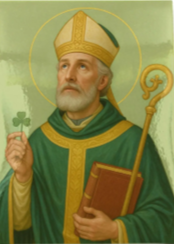
Happy St. Patrick’s Day—whether you’re going fact or legend, it’s a great excuse to celebrate!

St. Patrick is a mix of solid historical fact and popular myth/legend that grew over centuries. He was a real historical figure—a British-born missionary (likely from what is now Scotland or northern England/Wales area) who lived in the 5th century (roughly 385–461 AD). His birth name was probably Maewyn Succat, and he became known as Patricius (Patrick) later. He wrote two surviving documents: his Confessio (Confession) and a letter to Coroticus, which are the main primary sources about his life. These confirm he was kidnapped by Irish raiders as a teenager, enslaved in Ireland for about six years (herding sheep), escaped, trained for the church, and returned as a missionary bishop to convert the Irish to Christianity. He wasn’t the first Christian in Ireland—some communities already existed—but he’s credited with major missionary work and is the patron saint of Ireland.

Many beloved St. Patrick’s Day traditions and stories are myths or later embellishments: Myth: He drove the snakes out of Ireland. Completely legendary. Ireland has had no native snakes since the last Ice Age (about 10,000+ years ago)—the post-glacial island was isolated, and snakes never recolonized it. The “snakes” story symbolizes driving out paganism or “evil”  but it’s not historical. Myth: He used the shamrock to explain the Holy Trinity. This is a charming story, but it doesn’t show up in Patrick’s own writings or early biographies. While the shamrock (a three-leaf clover) became a symbol of Ireland and St. Patrick’s Day, the Trinity analogy is probably a later invention. Myth: St. Patrick was Irish by birth. No—he was Romano-British, captured and brought to Ireland against his will. Other common myths: Green wasn’t always the color associated with him or the holiday; massive parades and “wearing of the green” became big in America first; he didn’t drink green beer or eat corned beef and cabbage, those are more modern Irish-American traditions. In short: The man himself is fact—a brave, devout missionary who helped spread Christianity in Ireland. But many of the fun, magical tales attached to him are myths.

ni