


Learners Live

Meta, ABC Launch Construction Training Academy

Meta Platforms Inc. and Associated Builders and Contractors (ABC) announced a partnership to educate and provide construction-ready career pathways for thousands of data center construction technicians, kicking off in Indiana, Louisiana, Ohio, and Texas as a meaningful step toward meeting the growing demand for data center workers nationwide. America’s Workforce Academy is a $115 million investment in the next generation of construction professionals, including a five-week training program and a job offer from contractors working on Meta projects at the conclusion of the program. Once an online application process is complete, scholarships, travel, housing, and stipends for living expenses are granted to qualified job seekers. They will then participate in career readiness and safety training, followed by five weeks of hands-on education, which includes core training and craft training. apply to America’s Workforce Academy

 

LCA Publishes Education Video Covering Occupancy and Vacancy Sensors

The Lighting Controls Academy has published a video version of EE102A: Occupancy and Vacancy Sensors, a free course available at YouTube. Occupancy and vacancy sensors are devices that detect when a space is unoccupied and accordingly automatically turn Off (or dim) the lights, thereby saving energy. Due to their relative simplicity and high energy-savings potential, these sensors are a staple in new construction and a feature of many retrofit projects. By the end of this course, you will be able to: 1) select an appropriate sensor technology based on a given application’s characteristics, 2) select appropriate features for the sensor to optimize performance in the given application, and 3) apply sensors to spaces based on their characteristics. . Lighting Controls Academy Publishes Education Video Covering Occupancy and Vacancy Sensors

Enbridge and Meta Announce 1.6 GWh Wyoming Solar and Energy Storage Facility to Serve Data Center Needs

Independent power producer and renewable energy developer Enbridge has announced that Meta will purchase power delivered by the first phase of its Cowboy Project utility-scale solar and energy storage facility.  The plan for the $1.2 billion site located near Cheyenne, Wyoming includes 365 MW of solar generation capacity and a 200 MW, 1,600 MWh battery energy storage system (BESS) supplied and serviced by Tesla. The Cowboy Project expands the existing renewable energy partnership between Enbridge and Meta, which now totals approximately 1.6 GW of contracted capacity across North America, and includes a 600 MW solar projectand two wind projects in Texas. Enbridge and Meta announce 1.6 GWh Wyoming solar and energy storage facility to serve data center needs – Energy Storage

Dallas, Texas Ranked No. 1 Primary Data Market in the World

Driven by accelerating AI adoption, cloud computing demand and digital infrastructure investment, global capacity under construction approached 31.7 gigawatts (GW) in 2025, more than doubling from 12.5GW reported in the prior edition of the report. At the same time, developers, occupiers and investors are facing intensifying constraints tied to power availability, land use, permitting timelines and growing regulatory scrutiny. The report analyzes 107 global markets across 24 variables tied to commercial real estate fundamentals, power infrastructure, development activity, regulation and operational risk and provides a more forward looking approach to evaluate market dynamics than previous editions. Cushman & Wakefield – Dallas, Texas Ranked No. 1 Primary Data Market in the World as AI Demand, Power Constraints and Regulation Reshape CRE Strategy

The Hassle of Approved Product Lists for EV Charger Rebates

EV charger rebates remain very strong heading into 2026, but finding an incentive is only the first step. Qualifying for it can be much harder. One of the biggest challenges is the continued use of Approved Product Lists, or APLs. These lists determine which chargers or networks are eligible for certain rebate programs.  24% of incentive programs across North America currently have an Approved Product List. That may sound modest, but many of these programs cover major markets where missing from the list can have a significant impact. Getting on these lists can take a lot of work, and not every manufacturer prioritizes the process. So we looked at which charger brands and networks appear most often on approved lists across North America. According to BriteSwitch’s RebatePro for EV Chargers, a record 85% of the US is currently covered by rebates, incentives, grants, or tax credits for installing EV charging equipment. The Hassle of Approved Product Lists for EV Charger Rebates

NAED Invests in New Electrical Career Outreach Effort

National Association of Electrical Distributors launches “Careers with Power” campaign to strengthen workforce pipeline. A strong workforce doesn’t happen by accident — it begins with awareness. Yesterday, the National Association of Electrical Distributors (NAED) announced the launch of Careers with Power, a comprehensive industry branding campaign designed to position electrical distribution as a dynamic, rewarding, and future-ready career destination. Careers with Power is built with a clear purpose: to introduce the electrical distribution industry to the next generation of talent and connect interested candidates directly to distributor career opportunities. Through a strategic mix of digital tools, social media outreach, and partnerships with leading workforce development organizations, the campaign meets potential employees where they are — and guides them toward meaningful careers in the industry. NAED Invests in New Electrical Career Outreach Effort | Electrical Wholesaling

Welcome to NEMA Academy

NEMA Academy is our new online platform offering accessible, high-quality training to strengthen industry knowledge and support workforce development. Advance your expertise with trusted, industry-backed training in lighting controls, dimming systems, and energy code compliance. Whether you’re focused on LED lighting controls, building automation, or IoT integration, NEMA Academy offers practical, standards-based courses to help you stay competitive and compliant. Explore our webstore and start learning today—designed for professionals who power the future of the built environment. NEMA Academy

Dept. of Labor Launches AI-Focused Apprenticeship Website

The U.S. Department of Labor announced the launch of its AI in Registered Apprenticeship Innovation Portal, a one-stop resource for organizations looking to build artificial intelligence literacy and develop AI-focused Registered Apprenticeship programs. Announced during the National Apprenticeship Week event, “Building the AI-Ready Workforce through Registered Apprenticeship,” the website provides practical tools and actionable guidance to help organizations integrate artificial intelligence skills into Registered Apprenticeship programs through skill-building resources, industry-specific training, and flexible program pathways. The initiative builds on the objectives laid out in the department’s AI Literacy Frameworkthat was released earlier this year. Dept. of Labor Launches AI-Focused Apprenticeship Website – tEDmag
Lighting Controls Academy Publishes Video Course on Lighting Controls and the 2024 IECC

The Lighting Controls Academy is pleased to offer Lighting Controls and the 2024 IECC, a Lighting Controls Academy course, available as a free video. Commercial building energy codes regulate the design energy efficiency of new buildings and renovations. This Education Express course provides general introductory knowledge about the lighting control requirements in the 2024 version of the IECC. By the end, you will be able to: 1) recognize projects and lighting systems covered by the 2024 IECC, 2) identify lighting control strategies applicable to various building spaces in projects covered by the 2024 IECC, 3) incorporate requirements in the 2021 IECC into Owner Project Requirements and Basis of Design documentation, and 4) plan lighting control solutions that comply with the 2024 IECC. This course is registered and/or recognized by NCQLP (LC), NALMCO (CLCP), DLC, and the State of California. EE203 The 2024 IECC and Lighting Controls

Then Came the Robots by Jim Romeo

The construction industry continues to pursue automation, with robotics emerging as a central pillar of that transformation. While the pace of adoption remains uneven, new data and recent field experience suggest that robots are moving rapidly toward practical tools, though with constraints, that will shape the industry’s trajectory over the next decade. According to the Coherent Market Insights construction robots report, the global construction robotics market is projected to grow from roughly $105.8 million in 2026 to $315 million by 2033, representing a compound annual growth rate of about 16.9%.  A key underlying driver is labor scarcity. Contractors across North America and other developed markets face persistent shortages of skilled workers; a trend expected to intensify as older people retire. This dynamic is already accelerating demand for automation technologies, particularly in tasks such as bricklaying, demolition and 3D printing—areas identified as high-growth segments in the market. To the pervasive automation anxiety that always worries workers and laborers, robots are not displacing workers as much as filling gaps that the labor market can no longer reliably supply. Then Came the Robots – Electrical Contractor Magazine

Interesting: The Three Pillars of Independence of an Organization

The 3 Pillars of Independence most commonly refers to a framework from the UK voluntary sector (specifically promoted by organizations like Bond and the Directory of Social Change). It is a toolkit for assessing and maintaining the independence of charities, NGOs, or civil society organizations.

The Three Pillars are:

  1. Independent of Party Politics – The organization (or regulator) must remain free from bias or influence by any political party or the government of the day. Decisions should be impartial, not favoring one political side.
  2. Independent of Populism – It should not be swayed by popular public opinion, media-driven campaigns, or transient public pressure, especially on controversial or unpopular causes.
  3. Independent of the Press – Freedom from media influence or pressure, ensuring decisions are based on evidence and law rather than headlines or public narratives.

This toolkit was created to monitor potential political encroachment on charitable regulation and to ensure charities can operate without undue external interference.


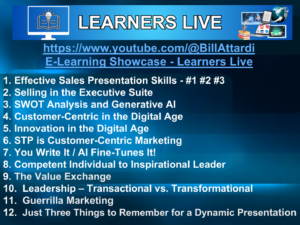
Check out the learning sessions we posted…

August Blog: Learning to Get Better by Bill Attardi

WE ARE NOW LIVE ON YOUTUBE: https://www.youtube.com/@BillAttardi