DALI Alliance and IES Collaborate for Lighting Standardization and Education

The DALI Alliance and the Illuminating Engineering Society (IES) are pleased to announce a strategic collaboration aimed at advancing the development, adoption, and harmonization of educational initiatives around global lighting standards. Through this collaboration, the DALI Alliance and IES will coordinate on activities such as education and training programs, and outreach to designers, engineers, and specifiers. The goal is to create greater alignment across lighting technologies and accelerate the deployment of intelligent and sustainable lighting solutions worldwide. DALI Alliance and IES Collaborate for Lighting Standardization and Education – tEDmag
 Early adopters who first transitioned from fluorescent and HID to LED lighting a decade ago are discovering that it’s time to replace their early-generation fixtures. Traditionally, rebate programs haven’t supported LED-to-LED upgrades, but that’s starting to change. As LED technology has evolved, both light quality and efficacy have significantly improved. One effective way to measure these advancements is by examining the
 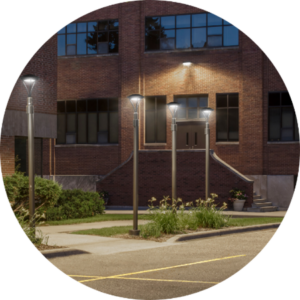 The DarkSky Approved Luminaires program provides objective, third-party approval for manufactured luminaires (light fixtures) that meet our strict guidelines for responsible outdoor lighting. Developed by industry professionals—including lighting engineers and designers—in collaboration with experts in the fields of wildlife biology, ecology, and human health, these guidelines ensure outdoor lighting minimizes light pollution while maintaining and improving functionality and safety. Luminaires that meet our rigorous criteria, based on the Five Principles of Responsible Outdoor Lighting, earn the DarkSky Approved seal—a trusted mark among the lighting community and consumers as the industry standard for dark sky-friendly lighting.
  For 25 years, the Lighting Controls Association, a council of the National Electrical Manufacturers Association (NEMA), has educated the building industry about lighting control technology and application, notably through its Education Express courses. The organization is proud to announce that starting May 1, 2025, the Education Express curriculum will be incorporated into a new learning management system,
  Architecture + Design Master gives architects and design practitioners the opportunity to earn free continuing education units (CEUs) through online articles and webinars, making it easy for them to maintain their licenses. To receive one hour of continuing education credit as approved by IDCEC or one learning unit approved by AIA, simply click on an article or webinar to view it and take the associated multiple choice exam — it’s that easy!
  The Light and Health Research Center’s (LHRC) is offering two online professional certificate courses in 2025. These interactive educational offerings will be led by LHRC faculty and staff who are the foremost experts in their fields. Courses begin in September, and registration for the classes is now open. The 2025 educational programs include: