From almost going out of business to #1 in the pizza industry worldwide! Founded by Thomas Monahan in 1960 and initiating the turnaround in 2010 by Patrick Doyle, this is a case study about how important solving problems and making sound decisions are to a business and that these skills are the core of effective management.
The plan for 2026 is to post a business case study every month for your pleasure and learning experience. I promise you that the analysis of these case studies is the best you will ever find. You will learn from decisions made by the most successful businesses we all know and, in some cases, why they eventually failed. In January we will start with the one that I start every one of my classes: Montgomery Ward. Why did they succeed and why did they fail…great learning lessons that could apply to your business today.
1. Creative Opening – your first impression
2. Meaningful Content – sharing what you know
3. Compelling Close – your lasting impression
You owe your audience a good performance and it’s directly related to your preparation.
If you give a dynamic performance, you have nothing to worry about but if you give a terrible performance, you have two things to worry about… HILARIOUS: Mike Goodwin – There are only two Things to worry about
How creative are you? Well, Marketing NOW demands it when you communicate with your customers. They do not have time for gibberish. One of the most creative is Guerrilla Marketing, an unconventional, low-cost communications strategy that relies on creativity, surprise, and high-impact interactions with your target customers. Connecting with your customers where they don’t expect it. Will cover relevance + surprise, not just shock value.
The value exchange in marketing is the mutual benefit between a business and its customers, where customers provide something of value (e.g., money, time, data, loyalty) in return for products, services, ideas or experiences of value that meet their needs or desires. Understanding this concept is critical for effective marketing. Lesson here is to understand your customer’s needs, pain points, motivations, and preferences to deliver value that leads to repeat business. Value is the WHY they do business with you…
I’m sure you, like me, have read many books over the years about leadership. Are leaders born or made? Answer: YES to both! This virtual learning session is about:
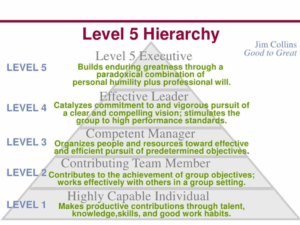
Good to Great by Jim Collins
Extreme Ownership by former U.S. Navy SEALS Jock Willink & Leif Babin
Powerful leadership principles from the battlefield to business and to life.
Have you ever wondered how a tiny LED light can produce such brilliant illumination with almost no heat and very little energy? In this video, we dive deep into the fascinating world of Light Emitting Diodes (LEDs). You’ll discover how LEDs work at the atomic level, the science behind electroluminescence, and what makes LEDs so energy-efficient compared to traditional light bulbs. Whether you’re a student, engineer, or just a curious mind, this detailed explanation will give you a clear understanding of the LED’s working principle. We’ll cover everything from how electrons move through semiconductor materials to how different colors of light are produced. You’ll also learn the advantages of using LEDs in modern electronics, home lighting, automotive applications, and even in cutting-edge display technologies. Watch to see a visual breakdown of the LED’s internal structure and why these small components are revolutionizing how we light up the world. Ideal for tech enthusiasts, educators, and anyone interested in understanding one of the most important innovations in modern electronics. If you’re curious about how everyday technology works, this is the perfect video to start with. Let’s uncover the secrets behind LED lighting and learn why it’s powering the future of illumination. What Is an LED and How It Works | Complete Guide to Light Emitting Diodes | Watch
Integration of robotics into reality capture has arrived in the construction industry. You can see it on projects where it is either walking on four legs or rolling around printing layout. Robotics is the next step in the construction technology revolution—SLAM and deck printing are a couple examples out there today. Take the robot called “Spot.” The Waltham, Mass.-based company has teamed up with Trimble, Westminster, Colo., to introduce the quadruped robot. Outfitted with a LiDAR scanner, Spot uses SLAM to autonomously navigate active job sites, capturing 3D data while avoiding obstacles in real time. According to reporting by Geo Week News, several contractors are using Spot for routine site documentation, progress tracking and as-built verification. This in turn is freeing up field staff for higher-value tasks. On a large social media tech campus project, Spot reduced manual photo documentation time by 60% and flagged several floor boxes that were misplaced compared to the model before slab pour, saving thousands in rework. Then there’s SitePrint by HP, Palo Alto, Calif. SitePrint is a robotic layout printer that uses SLAM to align with digital models and contract documents that accurately prints layout directly on the deck. Electrical contractors have begun using it for conduit paths, box locations, layout points and wall stub-outs. By combining SLAM-enabled robotics with BIM data, electrical contractors are simplifying the jump from design to field layout. Rather than replacing skilled labor, this technology streamlines it, which in turn frees up electricians to focus on running crews, installation, quality control and high-value tasks. Domo Arigato Mr. Roboto: Integrating Robots and Reality Capture – Electrical Contractor Magazine
No matter your job or position, your ability to communicate – whether in writing or speaking – at the highest level of your capability will determine your relationships and your success in those relationships. Competency to communicate effectively is a continuing learning process. It’s a critical skill for success. The more you do it, the more competent you become. Enter artificial intelligence… AI’s full impact on education—and life—is just beginning to unfold. But one thing is already clear: it can enhance everything we do. Start with your original ideas. Use AI to refine, elevate, and clarify. You write it, AI fine-tunes it! Practice this consistently, and you’ll do more than just communicate better. You’ll think better. You’ll learn faster. You’ll work smarter. And ultimately, you’ll succeed in ways you never thought possible.
The Creator of Baby Ruth Actually Sued Babe Ruth –The Baby Ruth candy bar was created by the Curtiss Candy Company in 1920 — the same year that baseball legend Babe Ruth hit a then-record 54 home runs. But the Great Bambino was irked that the company was selling a candy bar with such a similar name to his own without offering him any royalties. Rather than take the Curtiss Candy Company to court, the Sultan of Swat decided to make his own candy bar, and in 1926 he debuted Ruth’s Home Run bar. The Curtiss Candy Company responded by turning the tables and taking Ruth to court. They accused the slugger of trying to steal their trademark and capitalize on the success of their brand. In a 1931 deposition, Curtiss founder Otto Schnering insisted the candy was named after “Baby Ruth” Cleveland — the daughter of President Grover Cleveland. He also attested that the company came up with the name in 1919 before the baseball player had become a household name and that the name was merely coincidental. While the validity of those claims is disputed to this day, the court nonetheless ruled in favor of the candy company, forcing Ruth to end his foray into the world of candy.