

Learners Live

Welcome to the NEMRA Lighting Division

NEMRA Lighting Division is dedicated to empowering independent lighting representatives and their manufacturing partners. Membership in NEMRA Lighting Division connects you to a powerful network of professionals, programs, and resources powered by three core pillars: Advocacy, Education, and Networking. NEMRA Lighting champions the voice of independent lighting agencies and manufacturers, empowers members by building capabilities, and fosters connections for strong partnerships. Through Advocacy, Education, and Networking, your NEMRA Lighting Division membership equips you with professional development, relationships, and business strategies to give you a competitive advantage. NEMRA Lighting Division
Blue Energy Raises $380M to Build Grid-Scale Nuclear Reactors in Shipyards

As the grid strains under the weight of electrification and AI data centers, tech companies and utilities have been evaluating whether nuclear power can help with the burden. Blue Energy wants to build nuclear reactors in shipyards because these locations can handle large amounts of steel and can be easily shipped to the project site once completed. Once the reactor and other parts are completed in the shipyard, the company plans to move them to the installation site via barge. Though that limits the total number of sites Blue Energy can address, the company can still use rivers to reach deep into the U.S., Europe, Africa, and Asia. Blue Energy raises $380M to build grid-scale nuclear reactors in shipyards | TechCrunch

DOE Explores Using Its Lands for Data Centers

The U.S. Department of Energy (DOE) is helping ensure America leads the world in Artificial Intelligence (AI) while helping to lower energy costs by co-locating data centers and new energy infrastructure on DOE lands. To support this effort, DOE’s Office of Policy released a Request for Information (RFI) to inform possible use of DOE land for artificial intelligence (AI) infrastructure development to support growing demand for data centers. DOE has identified 16 potential sites uniquely positioned for rapid data center construction, including in-place energy infrastructure with the ability to fast-track permitting for new energy generation, such as nuclear.

View the full PDF RFI.   DOE Explores Using Its Lands for Data Centers – electrifiED

NAED Washington Wire: Information and Updates on IEEPA Tariff Refunds

The Supreme Court’s February 2026 decision striking down broad IEEPA tariffs has triggered a complex refund process, now centered at the CIT and being implemented by the CBP. The main action items are straightforward. Importers should track liquidation dates, confirm ACH and ACE enrollment, preserve all entry and payment records, and review any contracts that may affect refund sharing. Wholesalers and distributors should check whether their pricing or surcharge provisions address tariff reimbursement. All parties should continue monitoring CBP’s rollout, the CIT’s next orders, and any appeal activity that could affect the scope or timing of refunds. For businesses, the key distinction is between legal entitlement and commercial recovery. Importers of record are positioned to receive refunds directly, provided they maintain proper documentation and system readiness. In contrast, wholesalers and distributors must rely on contract terms to determine whether they share in any recovered duties, making careful review of agreements essential. NAED – Washington Wire

Coming Soon: Facilities That Also Happen to be Farm

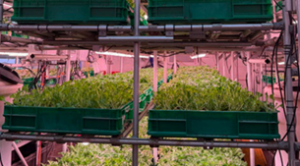
What if your most important tenants were not people but, well, crops? The coming of a new “vertical farm” industry is turning that unusual vision into reality. Vertical farms offer new, unique option for building owners looking for ‘tenants’. The multiple concerns with our global industrialized food system range from the existence of “food deserts” in which many people lack access to fresh, nutritious food to the increasing desire and market for food that is healthy, safe, high quality and free of harmful pesticides. The idea of bringing food production closer to its consumers is manifesting itself in the development of a new sector experimenting with how to turn buildings into indoor farms.  Coming Soon: Facilities That Also Happen to be Farms – Facilities Management Insights

LEDucation 2026 Marks 20 Years of Growth, Community, and Industry Impact

The LEDucation Trade Show and Conference, organized by the Designers Lighting Forum of New York (DLFNY), concluded another successful event at the New York Hilton Midtown on April 14–15, 2026. Now celebrating its 20th anniversary, LEDucation welcomed over 10,000 attendees and 565 exhibitors from around the globe, including a strong presence of new exhibitors, reinforcing its position as North America’s largest annual lighting industry gathering. Bringing together designers, manufacturers, educators, students, and industry professionals, LEDucation continues to serve as a vital platform for connection, discovery, and the exchange of ideas across the lighting community. Education remained a central pillar of LEDucation 2026, with a comprehensive program designed to address the evolving needs of the industry. LEDucation will return to the New York Hilton Midtown on April 13–15, 2027—expanding to a three-day format. For more information, visit www.leducation.org
Recent Trends In Horticultural Lighting by David Shiller

Recent horticultural lighting trends are centered on smarter LED systems, more precise spectral control, and tighter integration with greenhouse automation. The biggest shift is away from static lighting toward dynamic, data-driven lighting that can adjust intensity and spectrum in real time based on crop stage, natural sunlight, energy prices, and climate conditions. LEDs continue to replace older technologies like HPS because they deliver higher efficiency, lower radiant heat, dimming capability, and better spectral control. Industry and government sources also note meaningful electricity savings versus conventional horticultural lighting, which remains a major driver for adoption in commercial greenhouses and indoor farms. This efficiency story matters because energy is one of the largest operating costs in controlled environment agriculture. As a result, growers are looking for fixtures that do more than just provide photons; they want systems that can optimize output while reducing waste and heat load. More information is available here. Recent Trends In Horticultural Lighting | LightNOW

Amazon Plans to Invest $25 Billion in Mississippi Data Centers, Create 2,000 Jobs

Two years ago, Amazon broke ground on its first data center campus in Madison County—the largest capital investment in Mississippi’s history at the time. That milestone was followed by a $3 billion planned investment in Warren County. Today, we’re proud to share that our total statewide planned investment has reached $25 billion, with plans to create 2,000 high-skilled jobs across all our Mississippi data center operations, further solidifying the state’s position as a leader in technology and innovation. And the impact extends well beyond technology; our data centers are also creating lasting economic opportunity. In Madison County alone, more than 75 Mississippi companies are engaged in construction and operations, employing thousands of construction workers, electricians, and operational staff. Amazon plans to invest $25 billion in Mississippi data centers, create 2,000 jobs

Utilities Plan to Spend $1.4 Trillion Over Next Five Years to Power AI Boom by Jennifer Hiller

U.S. utilities are planning a historic investment spree to patch up an aging power grid and meet rising electricity demand for the artificial-intelligence boom. Capital spending plans for 51 investor-owned utilities have reached an estimated $1.4 trillion for the next five years, according to a new report from PowerLines, a consumer education group. That is up more than 20% from a year ago, when the companies planned to spend about $1.1 trillion over a five-year period. The record levels of capital investments are being driven by fresh demand on an aging electricity system that already needed upgrades. Unlike any prior customer, new AI data centers can consume the same amount of electricity as an entire city, with high demand around the clock. Beyond AI, many utilities are trying to keep up with growth in manufacturing, electric vehicles and residential markets, too. Utilities Plan to Spend $1.4 Trillion Over Next Five Years to Power AI Boom – WSJ

Energy Star’s Move to DOE Helps It Escape Proposed EPA Cuts

The Trump administration for the second year in a row is calling for elimination of the Office of Atmospheric Protection inside the U.S. Environmental Protection Agency, but the Energy Star program, which has been part of the office for 30 years, is positioned to escape the cut; since November, the program has been operating out of EPA’s Office of Radiation and Indoor Air and, starting in June, will be moved out of EPA entirely. Under an agreement EPA signed with the U.S. Department of Energy last month, DOE will take over administration of the program. The administration says the office isn’t needed and shutting it down will save the government $100 million.  Energy Star’s move to DOE helps it escape proposed EPA cuts | Facilities Dive

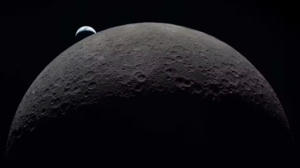
That’s one small step for man, one giant leap for mankind – The last time human beings headed moonward was on the Apollo 17 flight that launched Dec. 7, 1972—before any of the Artemis II crew members were born. Today’s crew will not land on the moon—they won’t even orbit the moon. But they will whip around the lunar far side, on a shakedown mission test-flying the Orion spacecraft. This is essential preparatory work for achieving NASA’s bigger lunar goals. Next year there will be another test flight in low Earth orbit during the flight of Artemis III, followed by up to two moon landings by Artemis IV and V in 2028, and annual landings thereafter. Unlike the Apollo program, Artemis aims not just for the so-called flags-and-footprints model of short, one- to three-day stays on the moon, but for a long-term presence at a long-term moon base in the south lunar pole, where deposits of ice can provide drinkable water, breathable oxygen, and oxygen-hydrogen rocket fuel. Very much like the Apollo program, Artemis finds itself in a closely watched moon race, not with the old Soviet Union this time, but with China, which has announced its intention to have astronauts on the moon by 2030. The U.S. is not going it alone this time, however. While Apollo was an entirely American enterprise, Artemis flies under the flag of 60 countries, signatories to the Artemis Accords, an international pact whose members vow to support the peaceful exploration of space and contribute money, modules, and astronauts to the Artemis cause. Artemis II Has Launched. Here’s Everything You Need to Know