With rising demand from AI, cloud hosting, co-location facilities, and edge-network buildouts, these facilities operate 24/7 and draw significant power. While most of that energy feeds servers and HVAC systems, data center lighting still plays a crucial role in uptime, safety, and efficiency. Choosing the right fixtures isn’t just a matter of visibility—it’s a matter of performance and sustainability. Lighting strategies in data center environments must support high performance and minimal disruption: XFit Linear High Bays with OpticSwap™
- High-temperature durability in hot-aisle conditions and continuous-run environments
- Vertical and horizontal illumination so techs can read rack labels and navigate aisles safely
- Smart controls, zoning, and automation to prevent lighting empty rooms for half the day
- Retrofit-friendly designs to upgrade legacy lighting without scheduled downtime – especially since the center needs to continue operation through all maintenance activities.
Keystone offers other solutions engineered for the specific demands of data center lighting.
Solutions for Data Center Lighting | Keystone Technologies




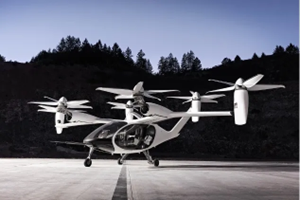 Flying cars have been a sci-fi staple for almost a century. There is a type of small flying vehicle that is now very close to commercial production. An eVTOL (electric Vertical Take-Off and Landing) is a new type of aircraft that uses electric power for vertical flight, allowing it to take off, hover, and land like a helicopter without a runway, while also transitioning to forward flight like a plane. These eco-friendly aircraft are designed for urban air mobility (UAM) to reduce traffic congestion, using multiple electric motors, advanced batteries, and often rotors or propellers for quiet, efficient, and potentially autonomous air taxi services. Here are some of the most likely impacts on the lighting industry at:
 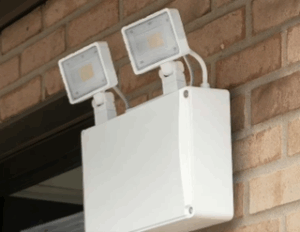 LEDVANCE has expanded its emergency lighting portfolio with a new solution designed to combine dependable performance with practical installation features. The Emergency Twin Spot luminaire is designed for applications where high visibility and directional emergency lighting are required. Suitable for use in both indoor and outdoor environments, its IP65-rated housing offers protection against dust and moisture, making it appropriate for areas such as warehouses, car parks, plant rooms, and external escape routes. Two adjustable spotlights allow installers to direct light precisely where it is needed, helping to improve coverage along defined escape paths. The luminaire is equipped with a LiFePO4 battery, providing a minimum of three hours emergency operation, and is supplied with mounting accessories to help streamline installation on site.
 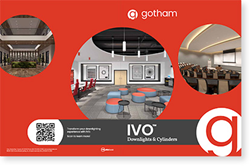 The launch of Acuity Brands’s Gotham IVO was centered around a contractor-first approach to ensure that electricians, contractors, and field installers were well informed, engaged, and supported at each phase of adoption. This approach also extended to distribution channels, which ensured a smooth process from ordering to installation, with an emphasis on making it easier to sell and manage product inventory. Acuity Brands also produced two features and benefits videos, an email signature, a family brochure, and a news release.
 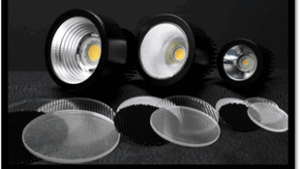 Modular International’s Tunable White LED modules allow independent control of both the intensity of the light and the color of the light separately. Featuring color tuning from 2700K to 6500K and intensity tuning from 100% to 0.1%, the modules also exceed industry averages for lumens per watt efficiencies across a range of wattages and delivered lumen packages in 70mm and 90mm diameters. Standard dimming protocols and control options with these modules include 0-10V (0.1%), DALI-2 Type 8 (0.1%, and 1% with Lutron LD2 drivers), and DMX (0.1%).
  Alloy LED introduces VariTune RazorLine 6.1, an ultra-narrow tunable white LED tape light that delivers full-spectrum white light in a compact footprint. Offering a broad range of color temperatures from 2700K to 6500K with a 90+ Color Rendering Index (CRI) rating, the tape light is only 4 millimeters wide, making it ideal for precision installations in space-constrained applications where typical tape lights can’t fit. The tape light offers smooth, controllable transitions across the entire white spectrum and integrates with tunable white controllers and systems. It’s flexible and field-cuttable every 1.4 inches with a 10-foot maximum run length.
  This modular acoustic lighting system features a choice of two profiles and several optional integrations for ultimate flexibility.
 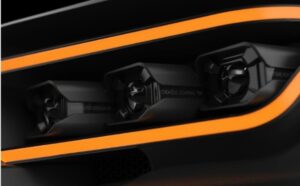 At ORACLE Lighting, we’re proud to unveil our most groundbreaking innovation yet: the world’s first lensless LED headlight—a revolutionary product that’s about to disrupt everything you thought you knew about headlight design. Our new lensless LED headlight eliminates the lens entirely, removing the most failure-prone element of the system. This cutting-edge design is made possible by modular Bi-LED emitter pods with innovative features such as IP68 ingress protection and active thermal management. Each LED component—from the DRL to the high and low beams—is fully serviceable and replaceable, giving users and installers a dramatically improved ownership experience.
 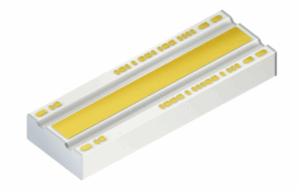 Autonomous driving demands sensor technology that delivers precision, reliability, and long-range performance every second. LiDAR systems capture the environment in three dimensions, regardless of lighting conditions, and enable safe, real-time decision-making. With its new 5-junction edge-emitting laser, ams OSRAM introduces a key component that elevates these systems to a new level of performance. Compared to the previous 3-junction technology, the new laser offers significantly higher optical peak power while consuming less electrical current. LiDAR is no longer reserved for premium vehicles. Whether it’s robotaxis navigating urban environments, automated delivery vehicles, or highway-level driver assistance systems – the range of applications is expanding rapidly. The increased range and precision not only enhance object detection and classification – they also enable OEMs to increase the speed for autonomous driving. This opens up new possibilities for highway driving and advanced driver assistance systems, without compromising safety or system reliability.