Education Resources
NEMA Launches New Digital Storefront
The National Electrical Manufacturers Association (NEMA) announced the launch of the NEMA Standards & Publications Store, a new NEMA-owned and operated digital storefront that serves as the authoritative source for NEMA technical standards and related publications. The launch represents a significant step forward in NEMA’s commitment to making its industry-leading standards more accessible to the product
Washington Wire: Permitting, AI, ENERGY STAR, and MOU Activity
NAED’s Government Relations department is keeping our members updated about current happenings in D.C. The latest Washington Wire is here, recapping permitting legislation, the White House’s new National Policy Framework for Artificial Intelligence, a shift in leadership at ENERGY STAR®, and what NAED and its MoU partners are doing on Capitol Hill.
US Department of Labor Launches ‘Make America AI-Ready’
The U.S. Department of Labor announced the launch of “Make America AI-Ready,” a free artificial intelligence literacy course that will help American workers learn the basics of AI simply by texting “READY” to 20202. The course is uniquely designed to deliver bite-sized learning content and daily challenges to users entirely
2026 Lighting Resource Guide by Jim Lucy
Electrical Wholesaling’s 2026 picks for where to go when you need to learn more about lighting, from A-Z. With all of the technological changes in lighting over the past few years, getting the latest available information on products and trends is critical. The associations, government resources, publications, websites and universities
Climate Intuition: Demand Is Here, Time to Build the Grid of Tomorrow
Electric grids worldwide are undergoing a transformation as surging electricity demand from data centers and electrification collides with aging, risk-prone infrastructure. This creates both national security imperatives and investment opportunities for grid resilience. Activities that harden, expand and modernize the grid are becoming increasingly attractive investment opportunities and policy priorities
EV Charger Rebate Trends for 2026 by BriteSwitch
2025 was a complicated year for the EV industry. EV sales fell sharply in Q4, and for those in the charging business, the headlines may have felt unsettling. But vehicle sales and the charging business are telling two very different stories. The US added 17% more charging ports, and utilization
FEATURED PRODUCT
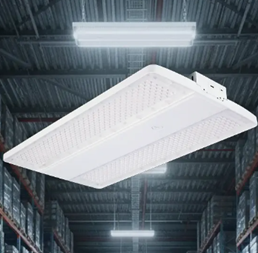
LED Beam Selectable Linear Highbay by SATCO/NUVO
The SATCO|NUVO LED Beam Selectable Linear Highbays deliver powerful, configurable illumination for high-ceiling commercial and industrial environments. Each fixture features selectable beam distributions of 45°x100°, 65°x95°, or 90°x90°, providing precise control for aisle, general, or wide-area lighting layouts. All models offer 3CCT selectability (3000K/4000K/5000K), multiple wattage options across four lumen
FEATURED ARTICLES
Design Research Looks at How Lighting Affects Mood by Jim Romeo
A 2026 study published in The Journal of the Illuminating Engineering Society is adding a new layer to the conversation about lighting design—one that electrical contractors and electricians working in commercial environments may want to pay close attention to. The research explored whether lighting conditions influence people’s self-reported mood, perception and health symptoms. Twenty-eight
The Distributor Is the Heartbeat of Construction Sales by Jim Nowakowski
Manufacturers know what they produce. Engineers know what they specify. Contractors know what they install. But distributors sit at the intersection of all three. The distributors see which products move through their warehouses. They hear the questions contractors ask at the counter. They learn which installations go smoothly and which
White Paper by Intertek: A Comprehensive Guide to AI Quality Assurance
Artificial Intelligence (AI) is transforming products, processes, and decision-making across industries, bringing enormous opportunity alongside a new category of risks around safety, bias, drift, data governance, and regulatory compliance. Rapidly evolving regulations like the EU AI Act all present challenges that traditional quality systems weren’t designed to handle. Download our