


Learners Live

ABC: Nonresidential Construction Adds Solid 27,900 Jobs in January

The construction industry added 33,000 jobs on net in January, according to an Associated Builders and Contractors analysis of data released today by the U.S. Bureau of Labor Statistics. On a year-over-year basis, industry employment has grown by 44,000 jobs, an increase of 0.5%. Nonresidential construction employment expanded by 27,900 positions, with gains in 2 of the 3 subcategories. Nonresidential specialty trade added 25,100 jobs, while nonresidential building added 3,600 new positions. Heavy and civil engineering lost 800 jobs in January. The construction unemployment rate was 6.9% in January. Unemployment across all industries decreased to 4.3% and is 0.3 percentage points higher than one year ago. ABC: Nonresidential Construction Adds Solid 27,900 Jobs in January
ABC: Construction Adds 15K Jobs in June

The construction industry added 15,000 jobs on net in June, according to an Associated Builders and Contractors analysis of data released by the U.S. Bureau of Labor Statistics. On a year-over-year basis, industry employment has increased by 121,000 jobs, or 1.5%. The construction unemployment rate fell to 3.4% last month. Unemployment across all industries declined from 4.2% in May to 4.1% in June.  June’s employment report, coupled with recent inflation data, indicate that the U.S. economy continues to demonstrate solid momentum, stable unemployment and declining inflation. Construction added jobs for a second consecutive month.  ABC: Construction Adds 15K Jobs in June – tEDmag

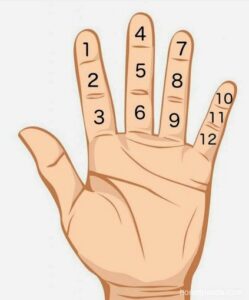
Telling Time – 12-hour time is a very ancient system that traces back to the Mesopotamian empires. They had a cultural fixation with the number 12, used a base-12 numerical system, and divided up most things into 12ths whenever possible – including day and night. The 12 hours of day and 12 hours of night system spread throughout Europe and the Middle East and has defied multiple attempts to change it over the centuries. Also, for anyone curious as to why there was such a love of the number 12, it was because that was how they counted on their hand. Look at your hand. Notice how each of your fingers minus your thumb has three easily identifiable parts to it. They used to count by using their thumb to count each part of the finger, much in the same way we count to 10 using our fingers today. So, 12 was the max you could count on one hand.