LEDtronics’ PAR38C-13WP Series Replaces Halogens Up to 90 Watts

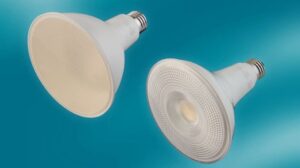 LEDtronics’ PAR38C-13WP Series is a high-brightness, energy-efficient LED replacement for PAR38-style floodlight bulbs. The dimmable LED bulbs have an E26 screw base and are suitable for damp locations; they can be used as track or accent lighting, security or emergency lighting, architectural and landscape lighting, display-case or fabinet lighting, museums and galleries, and more. They come with a softly diffused, frosted glass lens that directs a 40-degree, high-lumen beam of light in an omnidirectional illumination pattern of even lighting with no buzzing or flickering. The UL-listed lamps operate at an input voltage of 120VAC and can replace halogen lamps up to 90 watts while consuming only 12-13 watts. Choose from 2760K halogen or 3830K natural white light; both have a Color Rendering Index (CRI) of 80.
 On the cutting edge of landscape lighting technology, WAC Group introduces the groundbreaking Colorscaping Smart Landscape Lighting System. This innovative, patented line of exterior LED luminaires is designed and engineered to illuminate landscapes with tunable white light and an unlimited color palette. Colorscaping integrates a full selection of WAC Landscape Lighting fixtures, including adjustable accent, wall wash and path lights, hardscape, tape light, and with existing landscape lighting fixtures, too. New and existing landscape fixtures are installed quickly using the innovative Smart Transformer Control Panel, which connects fixtures directly for immediate testing while cycling through preset tunable white and primary colors at various intensity levels. Offered with 150-watt and 300-watt capacities, the smart transformer enables robust wiring, a shielded ethernet cable, and a surge protector against power surges and voltage spikes.