Amerlux ORDX5 Wet Locations Downlight

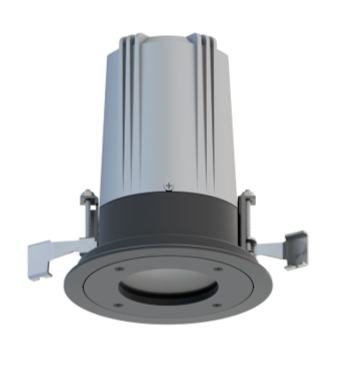
The Amerlux ORDX5 is a sealed downlight intended for open or uncovered canopies with direct exposure to the elements. UL listed for Wet Locations the fixture provides up to 1577 lumens and can be configured with choice of beam spreads, CCT’s, and output. A die-cast housing with powder coat finish protects from the elements above and allows direct connection to “liquid tight” flexible conduit often used in those applications. It can also be used in exterior covered ceilings as well. The fixture easily installs in metal ceilings (or canopies) as well as other ceiling materials with a thickness from .007” to 1.25”. ORDX5 – Amerlux – Commercial Interior Lighting Products Features & Benefits: Wattage 16W max; Lumen Output 1,577 max; Color Temp (CCT) 2700K, 3000K, 3500K, 4000K; Color Rendering Index (CRI) 80+, 90+. Spec Sheet: LIT-E0206-ORDX5-062526.pdf
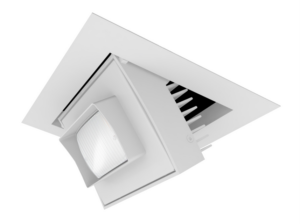 The Mini Cavaletto LED is a compact, recessed adjustable wall wash luminaire for commercial and retail environments. The unique optical design allows for 2:1 fixture to wall spacing while providing uniform light on the vertical plane. The Mini Cavaletto LED is a compact, recessed adjustable wall wash luminaire for commercial and retail environments. The unique optical design allows for 2:1 fixture to wall spacing while providing uniform light on the vertical plane. The high-performance optical head with various wattage options can be flush with the ceiling line to provide general illumination or pulled down (up to a 45-degree tilt) for wall washing or menu board lighting. Spaced up to 8′ on center, the Mini Cavaletto LED produces an even gradient of light for any vertical surface.
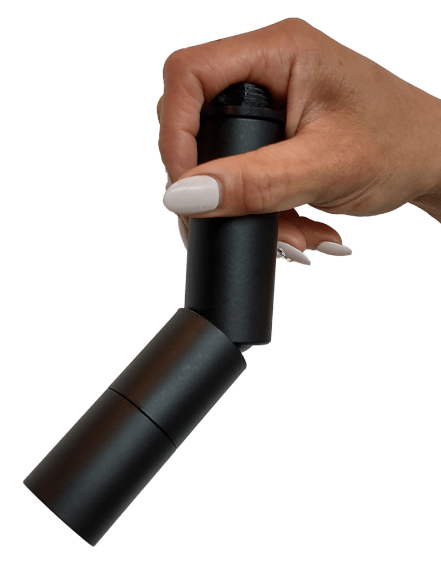 A marvel of engineering, this masterfully crafted 1.25″ surface mount fixture emits more than 1000 lumens, surpassing competitors with a single gentle beam of discreet quality illumination. With the implementation of Finch, a jewelry store— as well as many other applications—can enhance occupant comfort, improve the showcasing of merchandise and various design elements, and subtlety enforce advanced security measures, all while maintaining a sophisticated and elegant aesthetic sure to turn heads and profits. Finch is available in various lengths, finishes and inside colors on the bevel, which can be mixed and matched to create a unique design that complements the store’s aesthetic. The two-tone bevel finishes add an extra layer of elegance, echoing the luxury of the jewelry on display. For instance, gold-toned bevels could be used to echo the warmth of gold jewelry, or silver-toned ones for a modern, minimalist look.
  Market-leading performance. Small aperture. Maximum comfort. Designed to disappear into the ceiling, Amerlux’s Hornet 2.5 delivers up to 2000 lumens at 90+ CRI and 100 LPW from a compact 2.5” aperture, outperforming the competition in both visual comfort and beam control. It offers a monolithic, homogenous appearance that integrates seamlessly into any space. Featuring downlights, wall washers and adjustable fixtures in round and square configurations, this versatile collection offers up to 40°tilt-and-shift aiming, adjustable only, and a wall wash optic with minimal back spill. Trimmed, trimless and millwork options ensure seamless integration across a range of ceiling applications.
 Great sadness for me personally as I loved working with Frank at Amerlux. Dynamic executive who clearly knew where he was going and took everyone with him. The Star-Ledger reported on his extensive executive career……..here is the short version: Entrepreneur, successful businessman, adjunct professor, Airforce Veteran, loving father and grandfather Frank P. Diassi, 92, passed away peacefully in his sleep, surrounded by his loving family and devoted caregivers on April 5, 2025 at his home in Far Hills, NJ. Diassi was the Chairman and CEO of Sterling Chemical, a publicly traded company and was the Chairman and owner of Amerlux Lighting Solutions, a global architectural lighting design company. Mr. Diassi was also the Chairman and owner of Unicorn HRO, LLC, a national HR/payroll/benefits outsourcing company. Please make donations to Loyola Jesuit Center, 161 James Street Morristown, NJ 07960 Phone: 973-539-0740