XR Training: How Extended Reality Supercharges Brain-Based Learning

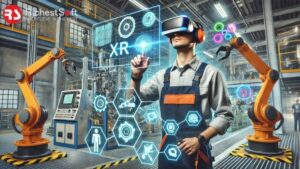 In today’s fast-paced digital workplace, organizations are searching for more effective ways to skill and reskill their workforces. Extended reality (XR), which encompasses Virtual Reality (VR), Mixed Reality (MR), and Augmented Reality (AR), offers an immersive and highly effective alternative. These XR technologies are not just more engaging—they also work in harmony with how the human brain learns best. Neuroscience shows that experiential learning—learning by doing—activates multiple regions of the brain at once. XR places learners in a simulated environment that mimics real-life scenarios, tapping into the brain’s natural mechanisms for spatial and sensory learning. This immersive context not only minimizes distractions but also enhances focus and recall through contextual cues that the brain retains as lived experiences. XR Training: How Extended Reality Enhances Brain-Based Learning