MicroLEDs: from Headlamps to the Data Center

When we think about the evolution of AI technology, developments in machine learning and large language models come readily to mind, as do the latest graphics processing units (GPUs), high-bandwidth memory (HBM), and exotic semiconductor technologies such as chiplets and heterogeneous integration. But car headlamps? Automotive lighting is not usually seen as an inspiration for the next big thing in AI. Interestingly however, high-tech ‘adaptive beam’ front lights are proving the reliability and scalability of a valuable optical connectivity technology which could help data center operators to meet today’s challenges of increasing network bandwidth, efficiency and reliability. But let’s take a step back to understand how headlamps could possibly be relevant to the technology of AI data centers at: [News] MicroLEDs: from Headlamps to the Data Center – LEDinside
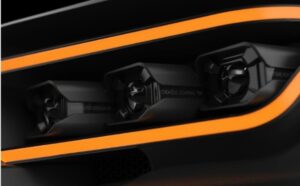 At ORACLE Lighting, we’re proud to unveil our most groundbreaking innovation yet: the world’s first lensless LED headlight—a revolutionary product that’s about to disrupt everything you thought you knew about headlight design. Our new lensless LED headlight eliminates the lens entirely, removing the most failure-prone element of the system. This cutting-edge design is made possible by modular Bi-LED emitter pods with innovative features such as IP68 ingress protection and active thermal management. Each LED component—from the DRL to the high and low beams—is fully serviceable and replaceable, giving users and installers a dramatically improved ownership experience.