


BriteSwitch: Rebates Bloom as Horticulture Lighting Market Heats Up

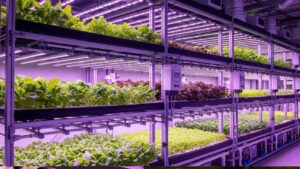 Once limited to research labs and specialized grow rooms, horticulture lighting has become one of the fastest-growing segments in the lighting industry. As technology costs drop and efficiency improves, these systems are now used in greenhouses, vertical farms, floriculture, and even in facilities producing plant-based vaccines. The global market is expanding at roughly 12% per year and is projected to reach $22 billion by 2033, making it one of the brightest opportunities for both lighting manufacturers and rebate-driven projects. Like they did with traditional lighting, LEDs have revolutionized grow lights. With 20 to 45% less energy usage than conventional HID grow lights, they provide a huge opportunity to cut operating costs for growers. The reduced wattage also means less waste heat, which is hugely beneficial to indoor growing operations. In October 2019, the DesignLights Consortium (DLC) created a new standard and Qualified Products List (QPL) specifically for horticulture lighting. Over the years, the DLC has become the de facto standard utilities use to ensure customers install high-quality lighting when applying for incentives. In 2025, the DLC released version 4.0 of its technical requirements. 55% of the US is covered by an active horticulture lighting rebate; 53% are calculated on a per-fixture basis. BriteSwitch Can Help You Find and Capture the Rebates:
- RebatePro to Find Horticulture Rebates https://briteswitch.com/rebatepro-for-lighting.php
- Outsourcing Rebate Processing https://briteswitch.com/news/OutsourcingRebates.php

 Early adopters who first transitioned from fluorescent and HID to LED lighting a decade ago are discovering that it’s time to replace their early-generation fixtures. Traditionally, rebate programs haven’t supported LED-to-LED upgrades, but that’s starting to change. As LED technology has evolved, both light quality and efficacy have significantly improved. One effective way to measure these advancements is by examining the