


Learners Live

LEDs Gain Ground in Controlled Environment Agriculture Space by Tim Kridel

Key Takeaways

  • LED lighting has shifted from niche to mainstream in controlled environment agriculture, driven by improved spectrum, output, and cost reductions.
  • Energy efficiency of LEDs allows growers to achieve higher light levels with less power, enabling cost savings and increased crop productivity, especially in high-value sectors like cannabis.
  • Dynamic spectrum control enhances crop quality and yield by allowing growers to customize light recipes for different growth stages, improving nutritional density and shelf life.
  • Utility rebates and incentives significantly offset the higher upfront costs of LEDs, making them a financially attractive option for growers investing in long-term infrastructure.
  • LEDs’ lower heat output impacts HVAC and humidity management, creating new opportunities for electrical contractors to optimize greenhouse climate control systems.

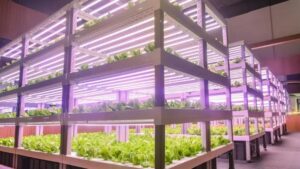
Those are just a few examples of artificial lighting’s role in controlled environment agriculture (CEA) facilities, which include greenhouses, warehouses, vertical farms, and even caves. The CEA market will grow from nearly $10 billion this year to $27.7 billion by 2035, Business Research Insights estimates. LED lighting is helping enable that growth. LEDs Gain Ground in Controlled Environment Agriculture Space | EC&M
The DLC’s Horticultural Lighting QPL- What You Need to Know by Kasey Holland

Valued at $7.8 billion last year, the global controlled environment agriculture (CEA) market is expanding at a compound annual growth rate of 12.2% and expected to reach $22 billion by 2033, according to a recent market research report. With lighting as the largest operational cost in CEA facilities, opportunities abound for indoor growers to save energy and reduce expenses with the right lights. The average efficacy of listed products has increased by nearly 25% since the DLC launched its horticultural lighting qualified products list (QPL) in 2019. There are now over 1,375 products from nearly 150 manufacturers on the Horticultural QPL – a more than 54% increase in listed products since 2020. The DLC’s Horticultural QPL offers CEA lighting specifiers and contractors increasing product variety, and CEA growers ample opportunities for savings. The DLC’s Horticultural Lighting Program aims to accelerate widespread adoption of high performance, energy-saving LED technology in the horticultural lighting sector. The Horticultural QPL is a key tool in advancing that goal. Accessing the QPL is simple – just create a free My DLC account to start searching. The DLC’s Horticultural Lighting QPL- What you need to know | EC&M
 

DLC Updates its Technical Requirements for LED-Based Horticultural Lighting

A new version of the DesignLights Consortium’s (DLC) Horticultural Lighting Technical Requirements released today strengthens efforts to improve the efficacy and quality of LED products used in the controlled environment agriculture (CEA) industry. Taking effect April 18, 2025, the DLC’s new requirements come at a time of burgeoning growth in the CEA sector. Valued at $7.8 billion last year, the global CEA market is expanding at a compound annual growth rate of 12.2 percent and expected to reach $22 billion by 2033, according to a February 2025 market research report. With lighting being the largest operational expense in CEA facilities, there are significant opportunities to increase energy efficiency and cost savings with the right lights. [News] DesignLights Consortium Updates its Technical Requirements for LED-Based Horticultural Lighting – LEDinside

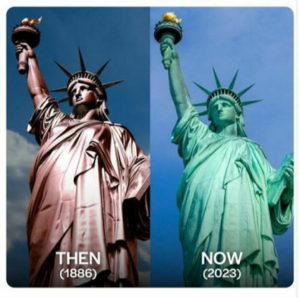
The Statue of Liberty was made with copper but due to oxidation, it turned green.

When the “Lady in the Harbor” first arrived in New York in 1886, she didn’t look like the mint-green icon we know today. In fact, for the first twenty years of her life, she stood as a towering, metallic beacon of reddish-gold. Designed by French sculptor Frédéric Auguste Bartholdi and engineered by Alexandre Gustave Eiffel, the statue was a gift from France to America. To build her, Bartholdi chose copper for three practical reasons:

  • Malleability:It could be hammered into elaborate, thin sheets.
  • Weight:Copper is lighter than stone or bronze, making it easier to ship 350 individual pieces across the Atlantic.
  • Durability:It was strong enough to survive a 27-day ocean voyage and the harsh winds of the harbor.

When she was unveiled on October 28, 1886, her skin—made of 300 copper sheets roughly the thickness of two pennies—shone with a bright, metallic brown luster. The transformation from “penny-colored” to “patina-green” wasn’t planned. Bartholdi actually expected the statue to age into a deeper, darker red. However, the unique environment of New York Harbor—a mix of salt air, moisture, and industrial pollution—triggered a process called oxidation.

The Timeline of Change:

  1. 1886–1900:The bright copper dulled into a dark, muddy brown.
  2. 1903:The first hints of a light green crust, or “patina,” began to appear.
  3. 1906:The color change was so controversial that Congress nearly stepped in. They appropriated $62,000 to paint the statue back to its original color, but the public protested, calling the idea “sacrilege.”
  4. 1910–1920:The statue was a patchy mix of brown and green until 1920, when the oxidation was complete, leaving her entirely teal.

While we now view the green color as iconic, it actually serves a vital structural purpose. The layer of verdigris (the green patina) acts as a protective shield. It seals the copper underneath, preventing the metal from further corrosion and weathering.  By the time the color fully changed, a new generation of immigrants had arrived in America seeing a green statue.