Facility Management Market Expected to Nearly Double by 2035 by Elaina Myers

As commercial and institutional buildings become smarter and business operations more interconnected, facility management is emerging as a powerful force behind efficiency, sustainability and long-term organizational success. The global facility management market is on a strong growth trajectory, with new research from Global Market Insights projecting the industry will expand from more than $2.45 trillion today to over $4.70 trillion by 2035. Several factors are driving this growth. Rapid urbanization, continued investment in smart infrastructure and rising demand for efficient building operations are reshaping the landscape. Facility management is no longer viewed solely as a maintenance function but as a critical discipline that supports workplace productivity, occupant safety and long-term resilience. Facility Management Market Expected to Nearly Double by 2035 – Facility Management Facilities Management Quick Read
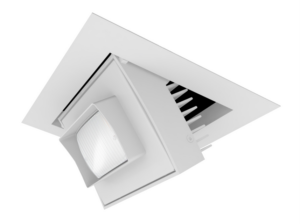 The Mini Cavaletto LED is a compact, recessed adjustable wall wash luminaire for commercial and retail environments. The unique optical design allows for 2:1 fixture to wall spacing while providing uniform light on the vertical plane. The Mini Cavaletto LED is a compact, recessed adjustable wall wash luminaire for commercial and retail environments. The unique optical design allows for 2:1 fixture to wall spacing while providing uniform light on the vertical plane. The high-performance optical head with various wattage options can be flush with the ceiling line to provide general illumination or pulled down (up to a 45-degree tilt) for wall washing or menu board lighting. Spaced up to 8′ on center, the Mini Cavaletto LED produces an even gradient of light for any vertical surface.
  Commercial building energy codes regulate the design of nonresidential buildings to minimize energy consumption. While the majority of U.S. states adopt model codes and standards, the State of California developed its own code: Title 24, Part 6 of the state’s Building Standards Code. The latest version was released in 2025 and will take effect January 1, 2026. Title 24, Part 6 covers residential, nonresidential, high-rise residential, and hotel/motel buildings. Title 24, Part 6 contains robust, detailed lighting and control requirements. It requires a broad range of controls to ensure general lighting is turned Off or reduced when not needed. . For lighting, a number of changes have been made, mostly adjustments and clarifications.