


Learners Live

Cost of Electricity Expected to Skyrocket Due to Data Center Demand by Greg Zimmerman

The explosion of artificial intelligence, cryptocurrency mining, and other computing-intensive processes have fueled a building boom for data centers. But they’ve also fueled a massive spike in energy demand, which is in turn leading to higher energy prices for many facilities across the country.  One study estimates data centers could be responsible for a 70 percent increase in the cost of electricity over the next 10 years. One hyperscale data center, as a point of reference, can use as much electricity as 40,000 homes.  Cost of Electricity Expected to Skyrocket Due to Data Center Demand – Facility Management Data Centers Quick Read
Why Amazon, Microsoft, Google and Meta Are Investing in Nuclear Power

Tech leaders are exploring nuclear power as a solution to the massive energy needs of their data centers, sustainability challenges, and the growing demands of their AI initiatives. SMRs, a new type of nuclear reactor, are gaining attention for their ability to provide round-the-clock power with minimal emissions. As some of the largest energy users, major tech companies are investing in these reactors, which could play a key role in global energy transformation. A must watch video:  Why Amazon, Microsoft, Google and Meta are investing in nuclear power | Watch

Ireland Embraced Data Centers That Now Consume Too Much Energy by Matt O’Brien

Dozens of massive data centers humming at the outskirts of Dublin are consuming more electricity than all of the urban homes in Ireland and starting to wear out the warm welcome that brought them here. Now, a country that made itself a computing factory for Amazon, Google, Meta, Microsoft and TikTok is wondering whether it was all worth it as tech giants look around the world to build even more data centers to fuel the next wave of artificial intelligence. Fears of rolling blackouts led Ireland’s grid operator to halt new data centers near Dublin until 2028. What other countries can learn from Ireland’s experience is to carefully manage the effect of data centers on the stability of the electricity system.      Ireland Embraced Data Centers That Now Consume Too Much Energy – electrifiED

Meta to Build $10B AI Data Center, Musk Expands AI Facility

The largest artificial intelligence data center ever built by Facebook’s parent company Meta is coming to northeast Louisiana, the company said Wednesday, bringing hopes that the $10 billion facility will transform an economically neglected corner of the state. Meanwhile, Elon Musk’s AI startup, xAI, is expanding its existing supercomputer project in Memphis, Tennessee, the city’s chamber of commerce said Wednesday. The chamber also said that Nvidia, Dell, and Supermicro Computer will be “establishing operations in Memphis,” without offering further details. The U.S. Commerce Department found that there aren’t enough data centers in the U.S. to meet the rising AI-fueled demand, which is projected to grow by 9% each year through 2030, citing industry reports. Meta to Build $10B AI Data Center, Musk Expands AI Facility – tEDmag

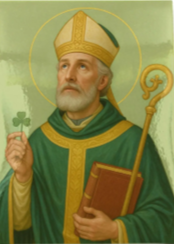
Happy St. Patrick’s Day—whether you’re going fact or legend, it’s a great excuse to celebrate!

St. Patrick is a mix of solid historical fact and popular myth/legend that grew over centuries. He was a real historical figure—a British-born missionary (likely from what is now Scotland or northern England/Wales area) who lived in the 5th century (roughly 385–461 AD). His birth name was probably Maewyn Succat, and he became known as Patricius (Patrick) later. He wrote two surviving documents: his Confessio (Confession) and a letter to Coroticus, which are the main primary sources about his life. These confirm he was kidnapped by Irish raiders as a teenager, enslaved in Ireland for about six years (herding sheep), escaped, trained for the church, and returned as a missionary bishop to convert the Irish to Christianity. He wasn’t the first Christian in Ireland—some communities already existed—but he’s credited with major missionary work and is the patron saint of Ireland.

Many beloved St. Patrick’s Day traditions and stories are myths or later embellishments: Myth: He drove the snakes out of Ireland. Completely legendary. Ireland has had no native snakes since the last Ice Age (about 10,000+ years ago)—the post-glacial island was isolated, and snakes never recolonized it. The “snakes” story symbolizes driving out paganism or “evil”  but it’s not historical. Myth: He used the shamrock to explain the Holy Trinity. This is a charming story, but it doesn’t show up in Patrick’s own writings or early biographies. While the shamrock (a three-leaf clover) became a symbol of Ireland and St. Patrick’s Day, the Trinity analogy is probably a later invention. Myth: St. Patrick was Irish by birth. No—he was Romano-British, captured and brought to Ireland against his will. Other common myths: Green wasn’t always the color associated with him or the holiday; massive parades and “wearing of the green” became big in America first; he didn’t drink green beer or eat corned beef and cabbage, those are more modern Irish-American traditions. In short: The man himself is fact—a brave, devout missionary who helped spread Christianity in Ireland. But many of the fun, magical tales attached to him are myths.

ni