


Learners Live

How Intelligent Light Redefines the Driving Experience

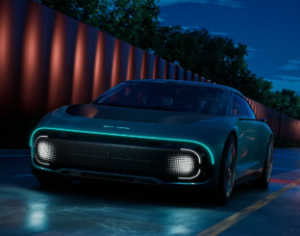
Innovation today means much more than enhancing an LED to emit more lumens, or adding an optical sensor to an electronic control unit (ECU) to extend its functionality. Based on intelligent light which incorporates sensors, light emitters, data processing and software operating in concert, the real optical innovations today produce system change, helping car manufacturers create a safer, more automated, more comfortable, and more enjoyable user experience. ams OSRAM, a partner of the automotive industry for many decades, has long used its understanding of automotive applications to develop attractive and valuable LED solutions. In an SDV architecture, intelligent light technology is creating new ways to make car use safer, more comfortable and more enjoyable. In response, ams OSRAM has widened its strategic focus to encompass a broader discipline, Digital Photonics: the integration of optical sensing, light emission and digital control functions. Digital Photonics helps bring new possibilities to automotive lighting, from headlights that illuminate the road and communicate with other road users to interior lighting that adapts its color to shape the atmosphere inside the cabin. It is this combination of light and intelligence which is generating exciting new uses for optical technology. [News] How Intelligent Light Redefines the Driving Experience – LEDinside

The Age of Smart Light: How Digital Photonics Unlocks a New Wave of Innovation

Digital Photonics is at the core of ams OSRAM’s strategy, describing the combination of pixelated light emitters and sensors with digital interfaces turning them into intelligent systems. Digital Photonics, as we understand it, is transforming the role of light – from pure illumination to an intelligent, versatile technology that connects, senses and interacts. By combining advanced pixelated emitters, optical sensors, and digital interfaces, light becomes the foundation of a new generation of smart, programmable systems. Driven by megatrends, such as AI, AR/VR or robotics, this transformation is opening entirely new possibilities – faster, more efficient and more intuitive. Compared to conventional electronics systems, which rely on the flow of electrons, photonics systems can be faster, more energy-efficient, more resistant to interference, and more precise. These are inherent advantages based on the physics of light. [News] The Age of Smart Light: How Digital Photonics Unlocks a New Wave of Innovation – LEDinside

Here’s a little-known fact about the MLB World Series

First, let me congratulate the Milwaukee Brewers on their first World Series Championship. Well played the entire 2026 season, 103 wins was the best.… My new team in the NL!

The 1903 World Series was the first modern World Series, and the Boston Americans (now the Red Sox) defeated the Pittsburgh Pirates 5 games to 3. Do you believe it………….a team from Boston actually won the first World Series…….  The surprising twist: The World Series wasn’t played at all in 1904! The NY Giants refused to participate because their owner, John T. Brush, considered the championship unnecessary. The Series returned in 1905, when those NY Giants won. So, baseball’s biggest annual event actually skipped its second year! The team from Boston (Americans, then Red Sox) have a World Series record of 9 wins and 4 losses in championship appearances, for a 69.2% championship success rate. Their nine championships came in 1903, 1912, 1915, 1916, 1918, 2004, 2007, 2013 and 2018. Sad fact: The team from Bean Town waited 86 years between championships, from 1918 until its dramatic victory in 2004 over the St. Louis Cardinals (4-0), when the Red Sox ended the famous Curse of the Bambino……just sayin!