LCA TV: Lighting Controls Academy Publishes Video Version of Introduction to Dimming Course

The Lighting Controls Academy has published a video version of its popular Education Express course EE103A: Introduction to Dimming, now available at YouTube. This course introduces the core concepts, applications, and coordination practices needed to understand, design, specify, and verify the successful operation of dimming systems in commercial buildings. By the end of this course, you will be able to: 1) advise clients about dimming options, 2) recognize and avoid common dimming problems, 3) utilize dimming various control strategies, and 4) identify documentation and commissioning steps. This course is registered and/or recognized by CALCTP, NLCAA, NCQLP (LC), NALMCO (CLCP), DLC, and the State of California. To gain education credit, click here to access the course and successfully complete the associated quiz at NEMA Academy. LCA TV: Lighting Controls Academy Publishes Video Version of Introduction to Dimming Course
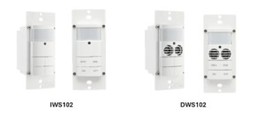 The Keilton+autani IWS102/DWS102 by LiteTrace Brands transforms standard wall switches into intelligent control hubs that manage both hardwired lighting and networked devices based on occupancy, without requiring ceiling-mounted sensors or fixture modifications. Unlike typical occupancy sensors that only control their hardwired load, the IWS102/DWS102 offers dual control architecture: hardwired occupancy-based switching for connected lighting plus wireless Bluetooth control of additional networked loads. The integrated 4-button interface provides manual dimming and On/Off control while occupancy functions operate independently. A single wall-mounted sensor orchestrates lighting and equipment control across an entire room through the Keilton+autani Bluetooth network, including plug load controllers (WF20R) for appliances and equipment. Ideal for conference rooms, private offices, lunch rooms, storage areas, copy rooms, and restrooms where coordinated lighting and equipment control maximizes energy savings.