


Learners Live

Leviton Celebrates 120 Years

Leviton, a leading manufacturer of electrical, lighting, data network and energy management solutions that light, power and connect everyday spaces, is celebrating the 120th anniversary of its founding this year. Established in 1906, Leviton began as a small tinsmithing business founded by Isidor Leviton, where he produced mantle tips used for gas lighting. Since those humble beginnings, Leviton has grown from a single-product manufacturer into a global leader delivering comprehensive solutions across electrical wiring devices, lighting and controls, data networking and energy management. Today, Leviton products are found in homes, commercial spaces such as offices and healthcare facilities, data centers, schools, industrial environments and more – supporting safe, reliable, and increasingly connected spaces. Leviton Celebrates 120 Years
Free Learning Opportunities for Electrical Professional

With a special focus for electrical professionals, the Facilities Expo has solutions for any building challenges you might face. Here you will learn from industry experts, network, and explore our solution packed exhibitor floor—all for free! The Facilities Expo is a premier destination for facility managers, maintenance managers, and energy managers seeking innovative solutions, industry insights, and networking opportunities to optimize facility operations, enhance sustainability, and drive business success. Register at events throughout 2025 at: EXPOS | Facilities Expo 2025

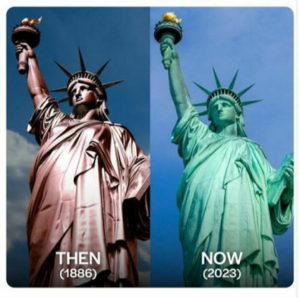
The Statue of Liberty was made with copper but due to oxidation, it turned green.

When the “Lady in the Harbor” first arrived in New York in 1886, she didn’t look like the mint-green icon we know today. In fact, for the first twenty years of her life, she stood as a towering, metallic beacon of reddish-gold. Designed by French sculptor Frédéric Auguste Bartholdi and engineered by Alexandre Gustave Eiffel, the statue was a gift from France to America. To build her, Bartholdi chose copper for three practical reasons:

  • Malleability:It could be hammered into elaborate, thin sheets.
  • Weight:Copper is lighter than stone or bronze, making it easier to ship 350 individual pieces across the Atlantic.
  • Durability:It was strong enough to survive a 27-day ocean voyage and the harsh winds of the harbor.

When she was unveiled on October 28, 1886, her skin—made of 300 copper sheets roughly the thickness of two pennies—shone with a bright, metallic brown luster. The transformation from “penny-colored” to “patina-green” wasn’t planned. Bartholdi actually expected the statue to age into a deeper, darker red. However, the unique environment of New York Harbor—a mix of salt air, moisture, and industrial pollution—triggered a process called oxidation.

The Timeline of Change:

  1. 1886–1900:The bright copper dulled into a dark, muddy brown.
  2. 1903:The first hints of a light green crust, or “patina,” began to appear.
  3. 1906:The color change was so controversial that Congress nearly stepped in. They appropriated $62,000 to paint the statue back to its original color, but the public protested, calling the idea “sacrilege.”
  4. 1910–1920:The statue was a patchy mix of brown and green until 1920, when the oxidation was complete, leaving her entirely teal.

While we now view the green color as iconic, it actually serves a vital structural purpose. The layer of verdigris (the green patina) acts as a protective shield. It seals the copper underneath, preventing the metal from further corrosion and weathering.  By the time the color fully changed, a new generation of immigrants had arrived in America seeing a green statue.