Elon Musk Predicts 3 Huge Milestones for the Next Decade by Mike Crisolago

Elon Musk is known for his visions of the future — even if most don’t come true. Nevertheless, such predictions, made by the world’s richest man — who controls some of the world’s biggest tech companies — at the very least allow observers to imagine that a future once confined to the realms of sci-fi fantasy could actually be within reach. On Tuesday’s earnings call, these three predictions stood out from the rest:
- SpaceX would deliver $1 trillion in revenue by 2030: No company has ever recorded a trillion dollars in revenue in a year, but Musk believes SpaceX could hit that mark sooner than even he’d projected.
- Starlink will provide the majority of the world’s internet in less than a decade: This is a bold prediction given the world boasts around six billion internet users and Starlink’s current subscriber base of 12 million represents about 0.2% of them.
- SpaceX could build a manufacturing hub on the moon: Perhaps the boldest of Musk’s predictions is his desire to use robots “to scale up manufacturing on the moon” to build factories, a mass accelerator and enable solar and radiator production. This is the prediction he referred to as sounding “super sci-fi right now” while reiterating that “it will happen with boots on the moon in 2028.” Elon Musk predicts 3 huge milestones for the next decade: ‘It sounds super sci-fi but it’s going to happen’
 Elon Musk has made another bold prediction about the future of brain-computer interfaces, claiming that Neuralink’s upcoming brain implant could restore vision in people who are completely blind – and eventually provide “superhuman” vision by enabling people to perceive infrared, ultraviolet, and even radar-like signals. According to Musk, Neuralink plans to implant its first vision device within the next 6 to 12 months. He claimed that even people who have been blind from birth could potentially regain the ability to see because the implant would bypass damaged eyes and optic nerves, sending visual information directly to the visual cortex, the part of the brain responsible for processing sight. For now, the science remains promising – but still in its early stages.
 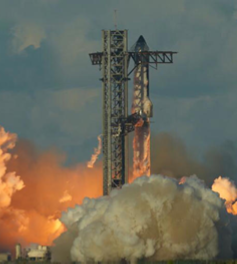 Elon Musk recently announced what seemed like an odd pairing of his companies: SpaceX was acquiring xAI, the artificial intelligence firm that also owns the social media platform X. The merger combines a highly profitable rocket company with an AI startup that is burning through billions of dollars as it competes with OpenAI and other rivals for dominance in artificial intelligence. The merged companies are valued at $1.25 trillion. That is higher than recent separate valuations of SpaceX at $800 billion and xAI’s holding company at $230 billion. IPO shares are expected to price at roughly $525. Aside from the financial benefits, there are technical reasons. Musk has sketched out a futuristic plan that involves sending up to a million satellites — called data centers — into an orbit, where the sun could power them all day and night while they do artificial intelligence computations.
  SpaceX CEO Elon Musk called reports of a planned IPO by SpaceX “accurate” on X, setting the stage for what could be a massing financial infusion for the company. Analysts are speculating the IPO could draw at least $800 billion to the company. Musk says a key strategy for SpaceX will include data centers in space, and the IPO will help fund the potential project. The per share price is expected to begin at $421. If the IPO happens next year, it could make SpaceX the most valuable company in the world.