Learners Live

LEDVANCE Emergency Lighting

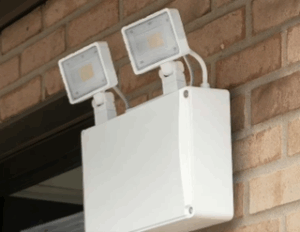
LEDVANCE has expanded its emergency lighting portfolio with a new solution designed to combine dependable performance with practical installation features. The Emergency Twin Spot luminaire is designed for applications where high visibility and directional emergency lighting are required. Suitable for use in both indoor and outdoor environments, its IP65-rated housing offers protection against dust and moisture, making it appropriate for areas such as warehouses, car parks, plant rooms, and external escape routes. Two adjustable spotlights allow installers to direct light precisely where it is needed, helping to improve coverage along defined escape paths. The luminaire is equipped with a LiFePO4 battery, providing a minimum of three hours emergency operation, and is supplied with mounting accessories to help streamline installation on site. LEDVANCE

Significant Changes to Emergency Lighting Standards Strengthen Building Safety

The comprehensive review and revision of three key British Standards aim to enhance safety and compliance, as well as provide clearer, more consistent guidance for the design, installation, and maintenance of emergency lighting systems in public and commercial buildings. Emergency lighting is a vital life-saving measure, guiding occupants to safety during evacuations, power outages, or other emergencies. The revised standards address critical areas including system verification, illuminance requirements, circuit integrity under fire conditions, and documentation protocols, ensuring a higher level of safety and compliance across the built environment.  Significant changes to emergency lighting standards strengthen building safety – A1 Lighting Magazine

SATCO|NUVO’s LED T8 with Integrated Emergency Backup – CCT Selectable | Ballast Bypass

SATCO|NUVO’s LED T8 Lamps with Emergency Battery Backup are UL924 listed for use in emergency lighting applications. Custom lamp holders and set screws lock the lamp in place for a secure installation, and lamps feature red endcaps so they can be easily identified when inspected and maintained. The test button allows for easy testing of the battery so that you can be confident in the lamp’s performance in the event of a power failure.  KEY FEATURES:

  • UL924 Listed Emergency Lighting
  • Range Voltage 120V-277V
  • Red Endcaps for Easy Identification
  • Prewired Lamp Holders Provided
  • 3 CCT Selectable

http://www.satco.com/new-products/article/led-t8-with-integrated-emergency-backup

Spec Sheet:  SN1810_15W_T8_LED_CCT_EM_PI_4-30-25.pdf

Remembering the Solemn Purpose of Memorial Day

Memorial Day is a federal holiday in the United States observed on the last Monday in May to honor and mourn U.S. military personnel who died while serving in the armed forces. The holiday traces its roots to the years immediately following the American Civil War (1861–1865), which caused massive casualties—roughly 620,000 soldiers dead, about 2% of the U.S. population at the time. Communities across the North and South began spontaneously decorating the graves of fallen soldiers with flowers, wreaths, and flags, a practice that gave rise to the original name: Decoration Day. On May 5, 1868, Major General John A. Logan, commander-in-chief of the Grand Army of the Republic (GAR)—a powerful Union veterans’ organization—issued General Order No. 11. This proclaimed May 30, 1868, as a nationwide “Decoration Day” to honor those who died in the Civil War. After World War I, the holiday expanded to honor all American service members who died in any war, not just the Civil War.  In 1968, Congress passed the Uniform Monday Holiday Act to create more three-day weekends for federal employees. This moved Memorial Day to the last Monday in May, effective in 1971, when it was also officially named “Memorial Day.” As one 1868 quote put it: “That Nation which respects and honors its dead, shall ever be respected and honored itself.”