Learners Live

Personal Growth Among Unequals by Bill Attardi

 Twenty years from now you will be more disappointed by the things that you didn’t do than by the ones you did do. So throw off the bowlines. Sail away from the safe harbor. Catch the trade winds in your sails. Explore. Dream. Discover. Mark Twain

Learners possess certain attributes that distinguish them from the learned. They anticipate rather than react to change.  Some call that vision. They become essential facilitators of change within their altered environment. They can skillfully communicate the new and technically esoteric with a clarity that leads to understanding and advocacy. Organizations that don’t value learning and the change that springs from learning will struggle to stay relevant in this fast-paced ever-changing marketplace. Learners influence change in an organization and, in turn, their leaders allow people to adapt to that change. Now AI provides deep learning…

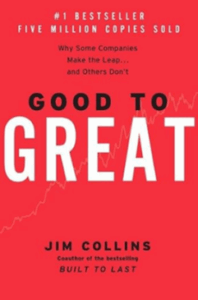
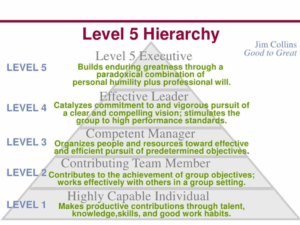
Author and teacher James C. Collins built a pyramid when he wrote: Good to Great: Why Some Companies Make the Leap… and Others Don’t. The book was a bestseller, selling four million copies and going far beyond the traditional audience of business books. The book was published on October 16, 2001. Jim Collins found that a common characteristic of the great companies was effectively moving highly competent individuals through the process to great leadership. Specifically, he defined “Level 5 Hierarchy” as a key to moving from Good to Great.

As an Educator, my ambition here is to express my view that education, the learning process, is not a onetime event but rather, something you do all the time.  Sounds a lot like Vince Lombardi when he talked about doing things right, not once in a while but all the time, right?  Winning is everything…… remember that?

College students are there to learn, to prepare for a life of success in a leadership role with an organization of their instigation or one of their choosing.  Personal growth in the business world. So who are you?

Highly Competent Individual

Level One: Jim Collins says you are: A highly capable individual who makes productive contributions through talent, knowledge, skills and good work habits. In every environment, in every company, in every department, in every office, in every classroom, on every team, there are inequities.  Men and women come in all sizes, all levels of acumen, all degrees of competency, skill and talent……..THE UNEQUALS.  Competent but unequal…

A Contributing Team Member

Level Two: A Contributing Team Member that contributes to the achievement of group objectives; works effectively with others in a group setting. The window here is open to the competent individual to move on and to show what kind of team player they are.  Level 2 asks how well you work with others, what kind of team player you are. How well you contribute in a team environment will determine whether you progress to Level 3.

Competent Manager

Level Three: One that organizes people and resources toward effective and efficient pursuit of predetermined objectives.  Does things right… Business is a team sport. Big corporations have big teams. Competing and winning is determined by how well the team performs. Sure the high performers can make a disproportionate contribution but so what, they most likely get the recognition, get the rewards, make the big bucks…..and they should.  But you win as a team and you lose as a team.  Now that’s not an original thought but athletes live by it and you should too. Now let’s talk about moving into executive management………responsible for the development and growth of others.

Effective Leader

Level Four:: Catalyzes commitment to and vigorous pursuit of a clear and compelling vision; stimulates the group to high performance standards.

 Management is doing things right; leadership is doing the right things.  Peter F. Drucker

I like this definition best: Effective Management is a problem-solving and decision-making process of effectively achieving organizational objectives through the efficient use of resources in an ever-changing environment.

  1. What Is… Effective Leaders are aware of what is happening around them.
  2. What Will Be… Effective Leaders understand that things change.
  3. What To Do… Effective Leaders make things happen…they are doers.

From Effective Leader to Inspirational Leadership

Level Five: Builds enduring greatness through a paradoxical combination of personal humility plus professional will. Jim Collins in his book Good to Great calls this: Executive Leadership but I feel it is bigger than that.  I like Inspirational Leadership… 

Leaders are skilled in the two most critical aspects of running a successful business: solving problems and effective decision-making. Let’s start with a certainty: Problems Are A Given.    If you go thru life and do not have any problems to deal with, then we call that fantasy land…. wake up!  Defining the problem, in most cases, is the easy part.  It’s the solution that’s hard. That requires good decision-making skills from knowledgeable / competent managers. Competent managed companies have crucial advantages in common, they attract more talented employees, grow faster and are more profitable. This only happens when there is a profound commitment from the top. Management and leadership aren’t the same thing however, but they do share common goals: inspiring others to do more and be better. When they lead by example, they start the process of becoming an effective leader and then maybe an inspirational leader. How many do you know?

I personally have had a wonderful career in the lighting business and am very lucky to know and work for some outstanding inspirational leaders.  Bill Cramer and John Max during my Westinghouse years; Bob Cappalli, Jack Briody and Steve Tumminello during my Philips years………….But now the days are short, I’m in the autumn of the year, it was a very good year….many good years. God bless them and my most appreciative gratitude that you came into my life and inspired me to do my best.  Still working to earn what you taught me.

Before you are a leader, success is all about growing yourself. When you become a leader, success is all about growing others.  Jack Welch

Challenging Journey to Inspirational Leadership

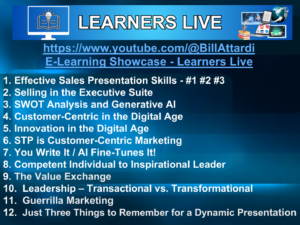
I’m sure you, like me, have read many books over the years about leadership.  Are leaders born or made?  Answer: YES to both! Just posted a virtual learning session on YouTube and LearnersLive.com is about:

  1. Good to Great by Jim Collins
  2. Extreme Ownership by former U.S. Navy SEALS Jock Willink & Leif Babin

Powerful leadership principles from the battlefield to business and to life.
               

We take you on a challenging journey from being a competent individual to an inspirational leader…..the key word is “challenging”. Competent Individual to Inspiration Leader 

Inspirational Leaders possess certain attributes that distinguish them from everyone else. They anticipate rather than react to change.  Some call that vision. They become essential facilitators of change within their altered environment. They can skillfully communicate the new and technically esoteric with a clarity that leads to understanding and advocacy. Those in their lead execute the plan because they want to.

In every environment, in every company, in every department, in every office, in every classroom, on every team, there are inequities.  Men and women come in all sizes, all levels of acumen, all degrees of competency, skill and talent……..Many times in any organization and often, not of your choosing, you get a diversity of high performers, good performers, weak performers, and those that do not contribute a dime to the performance of the team. When it comes to standards of performance, you have to decide how much are you willing to tolerate.  Inspirational leaders put together teams of exceptional talent and high standards of performance.  In the book Extreme Talent, the former Navy Seals say it bluntly: “There are no bad teams, only bad leaders.”  If your team fails, it’s on you the Leader.  Get your arms around that concept…..

Inspirational Leaders have certain skills and they are good at it, rather, they are expert at it.

  1. Set Goals… get buy-in by everybody!
  2. Opportunities – vision & execution
  3. Problem-Solving –
  • Internal: to prevent damage to the business
  • External: to solve customer pain points
  1. Decision-Making – do the right things

 About LearnersLive
LearnersLive.com is a platform dedicated to continuous learning and professional growth. Focused on leadership, marketing, and management, the site offers virtual courses, expert interviews, and curated industry resources. With new content added regularly, LearnersLive.com empowers individuals and organizations to embrace change through ongoing education and insight.
It’s Back to School – How Some of Our Most Acknowledged Universities Got Their Name – Who were the true visionaries who would donate half of their estate to sculpting the minds of the future. These stories are monuments to history and culture. Let’s take a stroll through academia’s memory lane and uncover the origins of these storied university names!

  1. Ah, Harvard! The Ivy League giant was once a small college in the Massachusetts Bay Colony settlement called New Towne. But where did “Harvard” come from? Enter John Harvard, a clergyman who, in 1638, decided to bequeath half his estate and his library (a whopping 400 books!) to the fledgling college. Grateful for this generous gift, they promptly named the institution after him.
  2. A gem of New Haven, Connecticut, Yale is another Ivy League powerhouse known for its prestigious law and drama schools. It owes its name to Elihu Yale, a wealthy merchant who, in 1718, donated a modest shipment of goods (including portraits, books, and textiles) to a struggling collegiate school. Those goods were auctioned off, raising a much-needed £562 –a small fortune at the time.
  3. Dartmouth is renowned for its beautiful rural setting, nestled in the picturesque town of Hanover, New Hampshire. It was named after the Earl of Dartmouth, William Legge, a British nobleman who supported the college’s founding –despite never actually setting foot in America!
  4. Brown, this Rhode Island Ivy University, known for its open curriculum and emphasis on student choice, was founded with a mouthful of a name – the College in the English Colony of Rhode Island and Providence Plantations. It was renamed in 1704 for Nicholas Brown, Jr., a prominent merchant whose family donated generously to the school.
  5. Perched atop a hill overlooking Ithaca, New York, Cornell is celebrated for its diverse academic programs and its stunning natural surroundings. Founded by Ezra Cornell and Andrew Dickson White, this university was unique for its commitment to practical education, allowing students the freedom to choose their own course of study. It was a revolutionary notion at the time, which would guide a curricular reform across the country.
  6. Located in the heart of Silicon Valley, Stanford is renowned for its entrepreneurial spirit and its close ties to the tech industry. But this California powerhouse has a touching origin story. Leland Stanford, Jr., the founder’s son, tragically died young from typhoid fever. His father Leland Sr., railroad magnate and former state governor, and his mother Jane, founded the university in his memory, ensuring his legacy lived on through the pursuit of knowledge.
  7. This North Carolina research giant, known for its strong medical and law schools, underwent a bit of a name change in its history. Originally called Trinity College, it was renamed Duke University in 1924 after James Buchanan Duke, a tobacco and electric power industrialist who founded the American Tobacco Company. He established The Duke Endowment, to which he donated throughout his life and left half his estate after his death.
  8. Nestled in Nashville, Tennessee, Vanderbilt is a renowned research university with a vibrant campus life. It owes its name to “The Commodore,” Cornelius Vanderbilt, a shipping and railroad magnate, who provided the initial gift to establish the university.
  9. Texas businessman William Marsh Rice provided the initial funding for this Houston university, but did not live to see its opening. He was murdered by his valet as he slept, in a plot to forge the man’s will. Despite the unfortunate circumstances, Rice University flourished through the years, becoming an institution known for its strong engineering and science programs.
  10. Who was Harvard named after? Origin of university names