


Learners Live

Can Solar Help Offset the AI’s Energy Demand? by Greg Zimmerman

Demand from data centers is expected to more than triple by 2028, according to the Department of Energy. This is largely due to the explosion of Artificial Intelligence, and its intense demand for electricity.  Meta, Amazon, Google, and Microsoft are just a few of the big tech companies investing billions in solar technology. Two of the main reasons for the investment in solar is that the solar development timeline is much shorter than for other sources electricity. At 1.4 years, solar is the shortest timeline to develop an 800-megawatt solar plant. That’s compared to 15 years for a nuclear power and 6.7 years for a coal-fired power plant.  Also, solar is much less expensive, is easily scalable, and pays back much quicker than other sources of electricity.   Can Solar Help Offset the AI’s Energy Demand?  – Facility Management Green Quick Read
Cost of Electricity Expected to Skyrocket Due to Data Center Demand by Greg Zimmerman

The explosion of artificial intelligence, cryptocurrency mining, and other computing-intensive processes have fueled a building boom for data centers. But they’ve also fueled a massive spike in energy demand, which is in turn leading to higher energy prices for many facilities across the country.  One study estimates data centers could be responsible for a 70 percent increase in the cost of electricity over the next 10 years. One hyperscale data center, as a point of reference, can use as much electricity as 40,000 homes.  Cost of Electricity Expected to Skyrocket Due to Data Center Demand – Facility Management Data Centers Quick Read

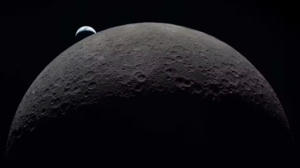
That’s one small step for man, one giant leap for mankind – The last time human beings headed moonward was on the Apollo 17 flight that launched Dec. 7, 1972—before any of the Artemis II crew members were born. Today’s crew will not land on the moon—they won’t even orbit the moon. But they will whip around the lunar far side, on a shakedown mission test-flying the Orion spacecraft. This is essential preparatory work for achieving NASA’s bigger lunar goals. Next year there will be another test flight in low Earth orbit during the flight of Artemis III, followed by up to two moon landings by Artemis IV and V in 2028, and annual landings thereafter. Unlike the Apollo program, Artemis aims not just for the so-called flags-and-footprints model of short, one- to three-day stays on the moon, but for a long-term presence at a long-term moon base in the south lunar pole, where deposits of ice can provide drinkable water, breathable oxygen, and oxygen-hydrogen rocket fuel. Very much like the Apollo program, Artemis finds itself in a closely watched moon race, not with the old Soviet Union this time, but with China, which has announced its intention to have astronauts on the moon by 2030. The U.S. is not going it alone this time, however. While Apollo was an entirely American enterprise, Artemis flies under the flag of 60 countries, signatories to the Artemis Accords, an international pact whose members vow to support the peaceful exploration of space and contribute money, modules, and astronauts to the Artemis cause. Artemis II Has Launched. Here’s Everything You Need to Know