New Hazardous Location Luminaires Built for Extreme Environments by LEDvance

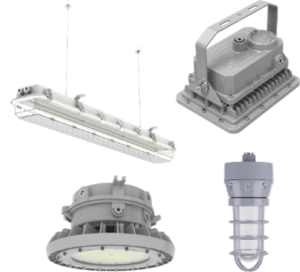 Choose LEDVANCE and cut energy use up to 90 % while slashing SKU counts with field‑selectable wattage, CCT and optics. Every fixture is backed by rigorous testing, North‑American service teams and more than a century of lighting expertise. Certified LEDVANCE hazardous location LED luminaires are engineered to deliver uncompromised safety, durability, and performance where failure isn’t an option. When you can’t compromise safety or performance, LEDVANCE hazardous location fixtures deliver dependable illumination backed by industry-leading engineering and approvals and an affordable price point. LEDVANCE Hazardous Location Lighting
 Engineered for harsh-environment applications, the HAZPAN can withstand use in the presence of flammable vapor, gases, and ignitable dust/fibers. They’re built for use in marine and hose-down environments, and ideal for manufacturing plants, chemical facilities, loading docks, and paper mills. The HAZPAN is offered in 1×4, 2×4, and 2×2 models, each available in two wattages and a bright 5000K for maximized visibility. Battery backup is available for all three sizes. The HAZPAN comes standard with both suspension chains and ceiling mount brackets out of the box, with aircraft cable tethers included for additional support. A mounting kit is also available for recessed use in a ceiling or grid. Available as a separate accessory, the HAZMVS is a microwave sensor engineered for hazardous location use.