


Sensing and Illumination in Humanoid Robotics by ams OSRAM

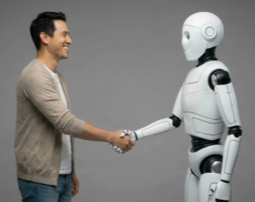 Humanoid robots are designed for direct interaction with humans in real‑world environments such as industrial production, logistics, healthcare and services. They rely on advanced sensing to detect people, objects and motion, enabling safe navigation and collaboration. High‑precision sensing and active illumination are key building blocks, providing real‑time environmental awareness and supporting safe physical interaction through technologies such as infrared sensing, 3D depth sensing and optical force sensing. Beyond functionality, light‑based visualization helps humanoid robots communicate status and intent in an intuitive, non‑verbal way, improving user understanding and supporting safe coexistence with humans. Lighting also plays a key role in human–robot interaction (HRI) by signaling status, intent and presence. Visible LEDs increase recognizability and trust, while projection systems provide intuitive, nonverbal communication. Humanoid Robots – 3D Sensing, LiDAR & Safe Human Interaction | ams OSRAM VIDEO: Optical Technologies Behind Humanoid Robots
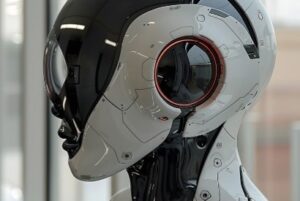 General-purpose robots could be useful in a range of construction activities, from moving heavy concrete blocks to welding and plumbing. Although these robots come in various forms, humanoids—those that resemble people in size and shape—attract the most attention. Humanoids are still relatively early in development, but they could potentially transform industries if developers and other stakeholders can overcome technological, regulatory, financial, and operational hurdles. Although humanoids are not yet a fixture at construction sites, they represent a potentially transformative solution to the productivity crisis. Their power comes from embodied AI, a technology that enables real-time decision-making. Rather than waiting for full-scale deployment to become a reality, forward-looking construction leaders should begin preparing now for a future in which humanoids and humans work together.Those who prepare now will be best positioned to seize the opportunities ahead. Humanoid robots involved in multiple4 construction sites at: