Coming Soon: Facilities That Also Happen to be Farm

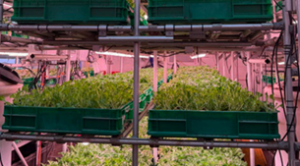 What if your most important tenants were not people but, well, crops? The coming of a new “vertical farm” industry is turning that unusual vision into reality. Vertical farms offer new, unique option for building owners looking for ‘tenants’. The multiple concerns with our global industrialized food system range from the existence of “food deserts” in which many people lack access to fresh, nutritious food to the increasing desire and market for food that is healthy, safe, high quality and free of harmful pesticides. The idea of bringing food production closer to its consumers is manifesting itself in the development of a new sector experimenting with how to turn buildings into indoor farms. Coming Soon: Facilities That Also Happen to be Farms – Facilities Management Insights
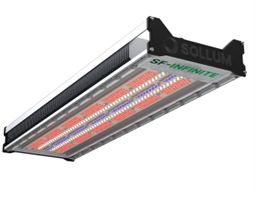 Sollum Technologies announced the launch of the SF-INFINITE™️ fixture, strengthening its leadership in lighting technology for commercial greenhouses. The SF-INFINITE is the most advanced dynamic LED lighting fixture. It consolidates Sollum’s roadmap in Greenhouse lighting represents one of the most capital-intensive infrastructure decisions that growers must make. Traditional systems often restrict operations into fixed capabilities for years after installation. This forces producers to anticipate future crop strategies, energy constraints, and market demands well in advance —often as they have yet to emerge. The SF-INFINITE was designed to eliminate that risk.to a single, future-ready solution designed to support the evolving needs of greenhouse operators.
 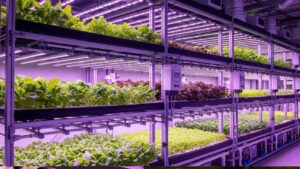 Once limited to research labs and specialized grow rooms, horticulture lighting has become one of the fastest-growing segments in the lighting industry. As technology costs drop and efficiency improves, these systems are now used in greenhouses, vertical farms, floriculture, and even in facilities producing plant-based vaccines. The global market is expanding at roughly 12% per year and is projected to reach $22 billion by 2033, making it one of the brightest opportunities for both lighting manufacturers and rebate-driven projects. Like they did with traditional lighting, LEDs have revolutionized grow lights. With 20 to 45% less energy usage than conventional HID grow lights, they provide a huge opportunity to cut operating costs for growers. The reduced wattage also means less waste heat, which is hugely beneficial to indoor growing operations. In October 2019, the
 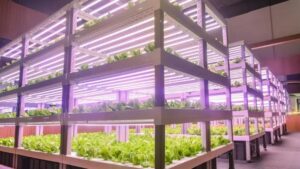 Valued at $7.8 billion last year, the global controlled environment agriculture (CEA) market is expanding at a compound annual growth rate of 12.2% and expected to reach $22 billion by 2033, according to a recent market research