US Overtakes Japan as Second-Largest Industrial Robot Market by David Hutton

The United States surpassed Japan in 2025 to become the world’s second-largest market for industrial robots, trailing only China in annual installations. US factories installed nearly 38,500 industrial robots last year, representing a 12% increase and marking the third-highest number recorded in the history of industrial robotics statistics. The milestone comes as global operational stock of industrial robots surged 9% to a record 5 million units in 2025, driven by an 11% jump in annual installations worldwide. Factories across the globe installed more than 600,000 new units over the year, demonstrating the accelerating adoption of automation technology in manufacturing operations spanning automotive production, electronics assembly, plastics processing, and other industrial applications. America Surges Past Japan in Global Robotics Race
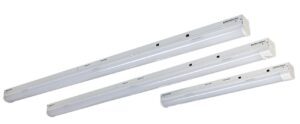 Not all Commercial Strip Lights are made the same. Here at naturaLED, we take pride in engineering LED products with useful features that make installation a breeze. Check out what makes a difference with the new CSL. The naturaLED® CSL is an energy-efficient LED commercial strip light designed to meet a variety of lighting needs. Ideal for new construction and multiple applications, it is perfect for warehouses, parking garages, stairwells, offices, hallways, and other industrial or commercial settings. This versatile fixture supports ceiling, wall, or cable mounting and delivers up to 9,180 lumens of bright, consistent illumination. Additionally, it offers compatibility with a PIC Plug-in Connector and an optional PIR Motion Sensor for enhanced functionality.