


Learners Live

Elon Musk Predicts 3 Huge Milestones for the Next Decade by Mike Crisolago

Elon Musk is known for his visions of the future — even if most don’t come true. Nevertheless, such predictions, made by the world’s richest man — who controls some of the world’s biggest tech companies — at the very least allow observers to imagine that a future once confined to the realms of sci-fi fantasy could actually be within reach. On Tuesday’s earnings call, these three predictions stood out from the rest:

  1. SpaceX would deliver $1 trillion in revenue by 2030: No company has ever recorded a trillion dollars in revenue in a year, but Musk believes SpaceX could hit that mark sooner than even he’d projected.
  2. Starlink will provide the majority of the world’s internet in less than a decade: This is a bold prediction given the world boasts around six billion internet users and Starlink’s current subscriber base of 12 million represents about 0.2% of them.
  3. SpaceX could build a manufacturing hub on the moon: Perhaps the boldest of Musk’s predictions is his desire to use robots “to scale up manufacturing on the moon” to build factories, a mass accelerator and enable solar and radiator production. This is the prediction he referred to as sounding “super sci-fi right now” while reiterating that “it will happen with boots on the moon in 2028.”  Elon Musk predicts 3 huge milestones for the next decade: ‘It sounds super sci-fi but it’s going to happen’

The Future is Now for AI

AI is expected to have as much impact on the business world as any of the largest technological trends, including the internet and personal computers. This e-book is a terrific primer on harnessing its powers. Channel Marketing Grouprecently collaborated with Charles Labow to publish an e-book on artificial intelligence, “The AI-Enabled Distributor.” It’s a must read for any executive in the electrical market who needs a solid overview of how distributors, manufacturers and representatives can use AI in their businesses. Along with analysis of the various AI models in use today, Labow includes contributions from several AI experts out in the field. Labow says, “The goal is not to convince you that AI is inevitable. You already know that. The goal is to help you think clearly about where it actually applies, where it does not, and what responsible leadership looks like in this moment.” The book is available for $39 through this PayPal link.

Keystone Solutions for Data Center Lighting

With rising demand from AI, cloud hosting, co-location facilities, and edge-network buildouts, these facilities operate 24/7 and draw significant power. While most of that energy feeds servers and HVAC systems, data center lighting still plays a crucial role in uptime, safety, and efficiency. Choosing the right fixtures isn’t just a matter of visibility—it’s a matter of performance and sustainability. Lighting strategies in data center environments must support high performance and minimal disruption: XFit Linear High Bays with OpticSwap™
  • High-temperature durability in hot-aisle conditions and continuous-run environments
  • Vertical and horizontal illumination so techs can read rack labels and navigate aisles safely
  • Smart controls, zoning, and automation to prevent lighting empty rooms for half the day
  • Retrofit-friendly designs to upgrade legacy lighting without scheduled downtime – especially since the center needs to continue operation through all maintenance activities.

Keystone offers other solutions engineered for the specific demands of data center lighting.

Solutions for Data Center Lighting | Keystone Technologies

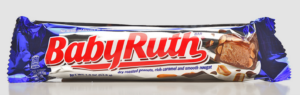
The Creator of Baby Ruth Actually Sued Babe Ruth –The Baby Ruth candy bar was created by the Curtiss Candy Company in 1920 — the same year that baseball legend Babe Ruth hit a then-record 54 home runs. But the Great Bambino was irked that the company was selling a candy bar with such a similar name to his own without offering him any royalties. Rather than take the Curtiss Candy Company to court, the Sultan of Swat decided to make his own candy bar, and in 1926 he debuted Ruth’s Home Run bar. The Curtiss Candy Company responded by turning the tables and taking Ruth to court. They accused the slugger of trying to steal their trademark and capitalize on the success of their brand. In a 1931 deposition, Curtiss founder Otto Schnering insisted the candy was named after “Baby Ruth” Cleveland — the daughter of President Grover Cleveland.  He also attested that the company came up with the name in 1919 before the baseball player had become a household name and that the name was merely coincidental. While the validity of those claims is disputed to this day, the court nonetheless ruled in favor of the candy company, forcing Ruth to end his foray into the world of candy.