


Learners Live

DOE Site in Kentucky to be Revitalized with Data Center Campus

A coalition of energy, infrastructure and utility companies announced a strategic partnership to develop a data center campus at the U.S. Department of Energy’s (DOE) Paducah Site in Western Kentucky. The $100 billion privately funded project repurposes land at the former enrichment site into a hub for innovation and energy generation. Once fully constructed in 2032, the campus will support up to 1.8 gigawatts (GW) of utility capacity and over 1.2 GW of compute capacity — backed by up to 4.6 GW of dedicated generation resources paid for and built specifically for the project, protecting customers from costs and fulfilling President Trump’s Ratepayer Protection Pledge. The partnership coalition includes Brookfield, NextEra Energy, Big Rivers Electric Power Corporation, Jackson Purchase Energy Cooperative and Paducah Power System. DOE Site in Kentucky to be Revitalized with Data Center Campus – tEDmag
GE Appliances Moves Washing Machine Production from China to Kentucky with $490 Million Investment

GE Appliances announced a nearly half-billion-dollar project Thursday that it says will create 800 new jobs and shift production of clothes washers from China to its massive manufacturing complex in Kentucky. GE Appliances says nearly all the steel used in its U.S. manufacturing for its appliances comes from American steelmakers. The redesigned factory will become its most advanced manufacturing plant for clothes washing production, the company said, featuring the latest in automation, robotics and material-handling technologies including automated guided vehicles and autonomous mobile robots.  GE Appliances shifting washing machine production from China to Kentucky | AP News

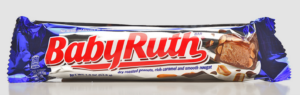
The Creator of Baby Ruth Actually Sued Babe Ruth –The Baby Ruth candy bar was created by the Curtiss Candy Company in 1920 — the same year that baseball legend Babe Ruth hit a then-record 54 home runs. But the Great Bambino was irked that the company was selling a candy bar with such a similar name to his own without offering him any royalties. Rather than take the Curtiss Candy Company to court, the Sultan of Swat decided to make his own candy bar, and in 1926 he debuted Ruth’s Home Run bar. The Curtiss Candy Company responded by turning the tables and taking Ruth to court. They accused the slugger of trying to steal their trademark and capitalize on the success of their brand. In a 1931 deposition, Curtiss founder Otto Schnering insisted the candy was named after “Baby Ruth” Cleveland — the daughter of President Grover Cleveland.  He also attested that the company came up with the name in 1919 before the baseball player had become a household name and that the name was merely coincidental. While the validity of those claims is disputed to this day, the court nonetheless ruled in favor of the candy company, forcing Ruth to end his foray into the world of candy.