Landscape Forms Announces Urbidermis’ Redesigned Candela Outdoor Lighting

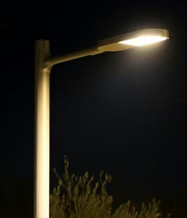 Building on the original 2009 design, this lighting option is now more flexible and lighter weight. Landscape Formshas released Candela, redesigned by urbidermis. This evolution of Gonzalo Milà’s 2009 design now features enhanced performance and adaptability, with high pressure cast aluminum housing that provides a lighter weight construction and anodized finishes and stainless steel hardware that can withstand demanding environmental conditions. A new steel and aluminum pole option adds structural flexibility, while an optional house-side shield minimizes backlight. Outdoor Site Furnishings and Lighting for… – Landscape Forms
 The naturaLED® 7X7 floodlight offers selectable wattages and color temperatures for versatile lighting solutions. With a flood beam distribution, it replaces up to 400-watt fixtures and includes a built-in photocell for efficiency. Its IP65 water-resistant rating ensures durability in outdoor conditions. Ideal for security, perimeters, entryways, facades, landscapes, and architectural lighting, it delivers bright and reliable illumination. The pre-installed 1/2” knuckle mount allows for easy installation and angle adjustment. This floodlight provides a flexible and energy-efficient solution for various residential and commercial applications. APPLICATIONS: Security, Architectural, Perimeter, Entryway, Pathway, Landscape