Learners Live

A Leader Is as a Leader Does: Leadership styles, traits, skills and more by Donny Metcalf, Electrical Contractor

  Let’s set the scene. You are approached by your supervisor, who says management feels you are doing very well. You have the respect of the rest of the crew and are ready for a leadership role. The question becomes, what does that look like? What do you look like as a leader? 

Key leadership styles and traits 

If you are given the opportunity to prove yourself as a leader, it is likely because you are good at your job and someone saw potential in you. But before you can be an effective leader, there are some key leadership styles and traits to identify.

In my opinion, two distinctive styles of leadership stand out: transformational and transactional leaders. A transformational leader inspires and motivates the team to innovate and work toward the goal. This usually results in high-performing teams with high morale.

A transactional leader focuses more on structured goals and rewards. This type of leadership style emphasizes clearly defined roles and performance metrics. Everyone knows the part they play, what needs to be accomplished and what is expected. Things are more black and white.

Regardless of which type of leadership you choose to practice, below are a few traits all good leaders possess:

  • Professionalism—We should carry ourselves as professionals, from the way we talk (profanity is not necessary every other word) to the way we dress (consider wearing a shirt with a collar and buttons and a clean pair of khaki pants or jeans).
  • Compassion/empathy—Remember that we were once in our employees’ shoes. Understand that everyone is at different levels of experience.
  • Knowledge—Know the project and process for what you are trying to accomplish. As leaders, it is not necessary to have all the answers, but we must be willing to do some research and find them.
  • Dependability—A good leader strives to do what they say they will do.
  • Motivation—Be the person your team can look up to when times get tough.
  • Problem-solving—Be creative with solutions to problems, especially with more complex projects with shorter completion times. Think of them as chances for excellence.
  • Accountability—Leaders hold the overall accountability for a project’s results (whether good or bad). We also hold individual team members accountable for their portion of the work.

 And, one of the most important skills—and often the most neglected—in leadership is communication.  A Leader Is as a Leader Does: Leadership styles, traits, skills and more | Donny Metcalf – Electrical Contractor Magazine

MIT Sloan Executive Education Programs

From clear communication to critical thinking and problem solving to adopting new technology, the essential skills of leadership require constant renewal. That’s why successful executives understand that lifelong learning isn’t just a mindset, it’s a strategic advantage. Our 90+ courses are here to help you stretch your thinking and hone your skills. Join us for one (or more) of these upcoming offerings in 2026:

Course Finder for Individuals | MIT Sloan

Earn Your Executive Certificate | Executive Education

MIT Sloan Solutions for Organizations

Executive Education Programs | MIT Sloan

Leadership – Transactional vs. Transformational

Leadership – Transactional vs. Transformational by Thomas Farrell October 2025

 Learn about two key leadership styles with Dr. Farrell Superintendent of Schools, NJ

  • Transactional – Competent Leadership that managing through systems and processes
  • Transformational – Inspirational Leadership that leads through vision and empowerment

The approach leaders take cascades through every level of the organization.

Challenging Journey to Inspirational Leadership

I’m sure you, like me, have read many books over the years about leadership.  Are leaders born or made?  Answer: YES to both! Just posted a virtual learning session on YouTube and LearnersLive.com is about:

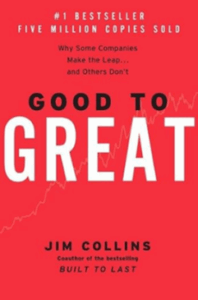
  1. Good to Great by Jim Collins
  2. Extreme Ownership by former U.S. Navy SEALS Jock Willink & Leif Babin

Powerful leadership principles from the battlefield to business and to life.
               

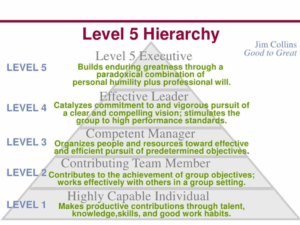
We take you on a challenging journey from being a competent individual to an inspirational leader…..the key word is “challenging”. Competent Individual to Inspiration Leader 

Inspirational Leaders possess certain attributes that distinguish them from everyone else. They anticipate rather than react to change.  Some call that vision. They become essential facilitators of change within their altered environment. They can skillfully communicate the new and technically esoteric with a clarity that leads to understanding and advocacy. Those in their lead execute the plan because they want to.

In every environment, in every company, in every department, in every office, in every classroom, on every team, there are inequities.  Men and women come in all sizes, all levels of acumen, all degrees of competency, skill and talent……..Many times in any organization and often, not of your choosing, you get a diversity of high performers, good performers, weak performers, and those that do not contribute a dime to the performance of the team. When it comes to standards of performance, you have to decide how much are you willing to tolerate.  Inspirational leaders put together teams of exceptional talent and high standards of performance.  In the book Extreme Talent, the former Navy Seals say it bluntly: “There are no bad teams, only bad leaders.”  If your team fails, it’s on you the Leader.  Get your arms around that concept…..

Inspirational Leaders have certain skills and they are good at it, rather, they are expert at it.

  1. Set Goals… get buy-in by everybody!
  2. Opportunities – vision & execution
  3. Problem-Solving –
  • Internal: to prevent damage to the business
  • External: to solve customer pain points
  1. Decision-Making – do the right things

 About LearnersLive
LearnersLive.com is a platform dedicated to continuous learning and professional growth. Focused on leadership, marketing, and management, the site offers virtual courses, expert interviews, and curated industry resources. With new content added regularly, LearnersLive.com empowers individuals and organizations to embrace change through ongoing education and insight.


A Leader’s Game Plan: How to Make More Time for the Most Important Tasks by Thomas G. Farrell

A well-conceived plan provides direction, helps identify potential challenges and increases the likelihood of success. A plan that mitigates operational tasks and affords more time for interpersonal relationship-building should be a centerpiece for any dynamic organizational leader. In any organizational leadership position, the key to success is engaging and inspiring staff, governance boards and constituent communities. This can only happen through visionary leadership and strategic thinking that is constantly communicated, organized, refined and adapted. Whether a private-sector corporation, public school district, private school, public agency, governing body or athletic team, engaging and communicating a shared vision of success to all stakeholders is the key for any organization. To truly become a transformational leader, your greatest success must come from how you connect with and empower people. How to make more time for the most important tasks


What Are Stablecoins and How Do They Work?

Stablecoins are less volatile than other cryptocurrencies (like Bitcoin) and due to crypto assets’ inherent instability, stablecoins are growing in popularity with both crypto and traditional markets. Stablecoins are a type of crypto asset, but one that offers a way to bridge the gap between fiat currencies like the U.S. dollar and cryptocurrencies. Because they are price-stable digital assets that behave like fiat but maintain the mobility and utility of cryptocurrency, stablecoins are a novel solution to crypto volatility: price stability is built directly into the assets themselves.  There are four primary stablecoin types, identifiable by their underlying collateral structure: fiat-backed, crypto-backed, commodity-backed, and algorithmic stablecoins.  What Are Stablecoins and How Do They Work? | Gemini