


Learners Live

LEDucation Conference to Offer 39 Educational Sessions

Show organizers for the LEDucation 2026 Conference in New York released some additional information on what should be another packed event. This year’s conference will feature 39 educational sessions presented by recognized experts and thought leaders in their fields. Interactive virtual programming on April 9–10 will be followed by rich in-person sessions April 14–15. LEDucation offers a total of 42.5 continuing education credits. Key Highlights

  • The event features 39 educational sessions led by recognized experts, covering both technical and design aspects of lighting.
  • Virtual programming on April 9–10 provides deep dives into digital workflows, AI, 3D printing, and health lighting innovations.
  • In-person sessions on April 14–15 focus on practical design applications, regulatory compliance, and emerging industry trends.

Registration – LEDucation

LEDucation Trade Show and Conference | April 14–15, 2026 New York City

LEDucation is the industry’s leading marketplace and educational platform dedicated to advancing architectural lighting innovation. The event features 400+ exhibitors across four halls showcasing the latest lighting products and technologies from leading manufacturers. Thirty-nine presentations explore key issues shaping today’s lighting industry and its path to a brighter, more efficient future. LEDucation – Presented by the Designers Lighting Forum of New York

Register for the 20th Anniversary Edition of LEDucation

Now celebrating its 20th year, LEDucation is expected to have more than 400 exhibitors and 40 educational sessions. Registration is now open for LEDucation 2026 in New York, NY, on April 14-15, 2026. This year’s event will feature the debut of “Designer Hours” on Tuesday, April 14, which will give lighting designers exclusive access to the exhibition halls from 9 am through 11:30 am so they can beat the crowds and visit manufacturer booths for efficient, in-depth engagement. Eligible attendees for Designer Hoursinclude lighting designers, architects, interior designers, landscape architects and engineers. Virtual sessions will be held April 9-10. Click here to register for this year’s event.

LEDucation 2026 Call for Speakers

Deadline for Submissions is September 15, 2025. LEDucation is now accepting speaker proposals for its 2026 Conference, taking place April 14–15 at the New York Hilton Midtown in New York City. Virtual sessions will be held the week prior to the in-person event. LEDucation provides insightful presentations, panel discussions, practical case studies, and addresses topics exploring emerging issues. The Conference will highlight the latest technologies, regulatory updates, essential issues, and lighting trends. Sessions are AIA CES–approved with many carrying AIA HSW approval as well. This Educational Conference draws expert lighting and architectural professionals along with those who are new to the industry—many seeking CEUs. Be sure your submission includes actionable takeaways and practical guidance that participants can immediately apply in their work. Call for Speakers – LEDucation

Your Guide to LEDucation 2025 and the EdisonReport Media Network

As LEDucation 2025approaches, attendees can look forward to an exciting lineup of virtual sessions, in-person events, and special recognitions. Below is everything you need to know, including schedules and registration details. 13–14 March: Virtual Sessions LEDucation 2025 offers 15 virtual sessions over two days, covering a diverse range of lighting industry topics. Attendees can register for individual sessions ($20 per session) or purchase a full virtual pass ($50) for access to all.  Register here.  Your Guide to LEDucation 2025 – EdisonReport

Registration Now Open for LEDucation 2025

LEDucation, a premier annual event for the North American lighting industry, is excited to announce that registration is now open for its 2025 Trade Show and Conference being held at the New York Hilton Midtown, March 18–19, 2025. New and returning exhibitors, industry influencers, and a myriad of engaging, educational experiences will help all attendees gain an advantage in the lighting business. With over 400 exhibitors gathered across four expansive Trade Show halls, attendees will be able to explore the latest advancements in lighting products and technologies that are shaping a brighter, more efficient future for our industry. For more information on these sessions including complete presenter bios, visit org/2025-presentations  Attendees can view registrations details and find a link to register at leducation.org/registration

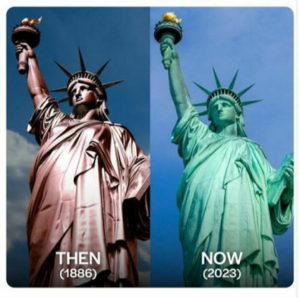
The Statue of Liberty was made with copper but due to oxidation, it turned green.

When the “Lady in the Harbor” first arrived in New York in 1886, she didn’t look like the mint-green icon we know today. In fact, for the first twenty years of her life, she stood as a towering, metallic beacon of reddish-gold. Designed by French sculptor Frédéric Auguste Bartholdi and engineered by Alexandre Gustave Eiffel, the statue was a gift from France to America. To build her, Bartholdi chose copper for three practical reasons:

  • Malleability:It could be hammered into elaborate, thin sheets.
  • Weight:Copper is lighter than stone or bronze, making it easier to ship 350 individual pieces across the Atlantic.
  • Durability:It was strong enough to survive a 27-day ocean voyage and the harsh winds of the harbor.

When she was unveiled on October 28, 1886, her skin—made of 300 copper sheets roughly the thickness of two pennies—shone with a bright, metallic brown luster. The transformation from “penny-colored” to “patina-green” wasn’t planned. Bartholdi actually expected the statue to age into a deeper, darker red. However, the unique environment of New York Harbor—a mix of salt air, moisture, and industrial pollution—triggered a process called oxidation.

The Timeline of Change:

  1. 1886–1900:The bright copper dulled into a dark, muddy brown.
  2. 1903:The first hints of a light green crust, or “patina,” began to appear.
  3. 1906:The color change was so controversial that Congress nearly stepped in. They appropriated $62,000 to paint the statue back to its original color, but the public protested, calling the idea “sacrilege.”
  4. 1910–1920:The statue was a patchy mix of brown and green until 1920, when the oxidation was complete, leaving her entirely teal.

While we now view the green color as iconic, it actually serves a vital structural purpose. The layer of verdigris (the green patina) acts as a protective shield. It seals the copper underneath, preventing the metal from further corrosion and weathering.  By the time the color fully changed, a new generation of immigrants had arrived in America seeing a green statue.