New Hazardous Location Luminaires Built for Extreme Environments by LEDvance

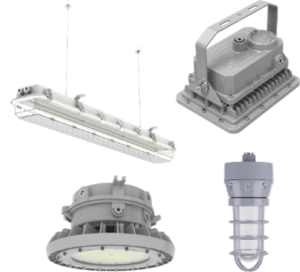 Choose LEDVANCE and cut energy use up to 90 % while slashing SKU counts with field‑selectable wattage, CCT and optics. Every fixture is backed by rigorous testing, North‑American service teams and more than a century of lighting expertise. Certified LEDVANCE hazardous location LED luminaires are engineered to deliver uncompromised safety, durability, and performance where failure isn’t an option. When you can’t compromise safety or performance, LEDVANCE hazardous location fixtures deliver dependable illumination backed by industry-leading engineering and approvals and an affordable price point. LEDVANCE Hazardous Location Lighting
 These CCT and wattage selectable luminaires are tough enough for almost any wet or dusty location. Featuring a one-piece body, end-to-end wiring, and 0-10V dimming down to 10% for extra energy savings, they install in minutes. LEDVANCE Dual Selectable Extruded Vapor Tight combines modern scale design with ease of installation featuring end to end wiring and full mounting channel. Available in 3 sizes, 3 CCT, and up to 13,750 lumens, its perfect for outdoor canopies, tunnels, stairwells, and a variety of other wet or dusty applications. Every fixture is backed by rigorous testing, North‑American service teams and more than a century of lighting expertise.
 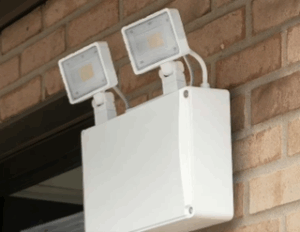 LEDVANCE has expanded its emergency lighting portfolio with a new solution designed to combine dependable performance with practical installation features. The Emergency Twin Spot luminaire is designed for applications where high visibility and directional emergency lighting are required. Suitable for use in both indoor and outdoor environments, its IP65-rated housing offers protection against dust and moisture, making it appropriate for areas such as warehouses, car parks, plant rooms, and external escape routes. Two adjustable spotlights allow installers to direct light precisely where it is needed, helping to improve coverage along defined escape paths. The luminaire is equipped with a LiFePO4 battery, providing a minimum of three hours emergency operation, and is supplied with mounting accessories to help streamline installation on site.
 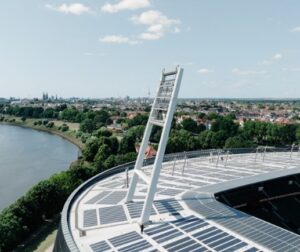 The floodlights at Bremen Germany’s Weserstadion are shining in a whole new light: LEDVANCE has equipped the iconic stadium on the Osterdeich with a cutting-edge LED The new installation meets the highest UEFA standards and creates a spectacular atmosphere for players, fans, and TV audiences alike. A total of 264 FL Arena Quattro luminaires were installed – 140 on the towers and 124 beneath the roof. Each tower was also fitted with ten green FL Arena singlebeam spotlights to create striking visual accents. To comply with the UEFA Elite Class A requirements, additional fixtures had to be mounted on load-bearing structures. The surrounding lighting was also renewed and now shines in warm white light without dazzling the residents in the neighborhood. The new system doesn’t just impress with outstanding light quality; it is also highly energy efficient.