Hollowcore Element Luminaires by Luminis Illuminate Indoors or Outdoors

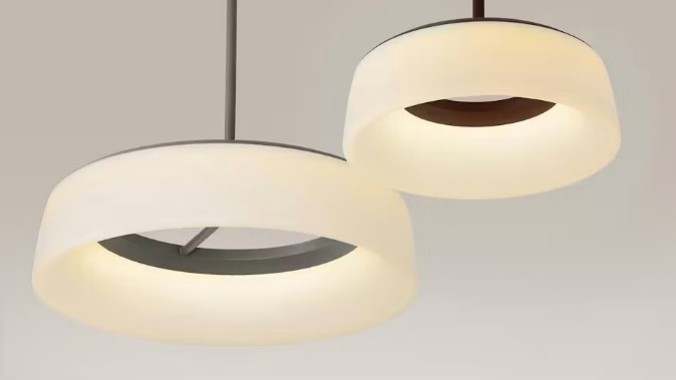
This lighting family features a circular form built around a luminous ring, as well as a distinctive interior core. Luminis introduces its Hollowcore Element luminaire family, featuring an open-core form and controlled illumination that brings focus to indoor or outdoor spaces. The clean, circular form is built around a luminous ring and a distinctive interior core. The optical system delivers even, controlled illumination, and the semi-opaque, double-layer lens creates a soft, wide distribution. Specifiers can choose from two optical configurations: an open distribution with a broader ambient presence or a metal shade configuration with more direct downward illumination. Multiple mounting types and two sizes are also available. Hollowcore Element features a Color Rendering Index (CRI) rating of 90 and color temperatures of 2700K, 3000K, 3500K, or 4000K. Architects of Modern Lighting | Luminis
 Luminis has expanded its Clermont family of interior and exterior luminaires with a new 12-inch size, which is also offered in a 39-inch-high bollard mount to illuminate environments at the pedestrian level. Both the 12-inch and original 18-inch size feature a refined profile and versatile design that works with multiple mounting options, including pole, post top, bollard, catenary, wall, ceiling, and suspended. Choose from two optic choices: the visual comfort optic, which ensures pedestrian ease and comfort outdoors and a smooth glare-free experience indoors, or the high-output performance optic, ideal for providing precise, powerful illumination for streets and open areas, where it improves visibility and minimizes dark spots.