Learners Live

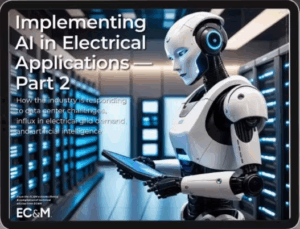
Implementing AI in Electrical Applications— Part 2 by Michael Morris

From the EC&M e-books library: How the industry is responding to data center challenges, influx in electrical grid demand, and artificial intelligence. For this e-book, we’ve collected a selection of articles that further explores different ways artificial intelligence (AI) is impacting the electrical industry. This article looks at how new technology, specifically AI, will increase demands on data centers and how electrical engineers are working to ensure data centers can meet these demands. Building off that theme, the next articles look at the relationship between data centers, AI, and the electrical grid. Implementing AI in Electrical Applications— Part 2 | EC&M  Part 1: Implementing AI in Electrical Applications— Part 1 | EC&M

 

Implementing AI in Electrical Applications— Part 1 by Michael Morris

From the EC&M e-books library: How the industry is incorporating artificial intelligence into the electrical space.  Ever since the rise of ChatGPT in November 2022, artificial intelligence (AI) has been unavoidable. Just about every industry is developing ways to incorporate AI into their field, and the electrical industry is no different. EC&M has followed the rise of AI in order to keep our readers informed on how the technology is impacting the electrical industry. This content has been immensely popular, so we decided to collect some of the best articles into our first e-book of 2025. The topic of artificial intelligence and its role in the electrical industry is such an important and rapidly evolving one that we decided we’ll need two e-books to do it justice. Stay tuned for “Implementing AI in Electrical Applications — Part 2” releasing later in 2025.  67d1dc96c1db52f96511aefc-ecm_ebook_implementing_ai (1).pdf

The Genesis of the U.S. Space Force – On December 20, 2019, President Donald Trump signed the National Defense Authorization Act (NDAA) for Fiscal Year 2020, officially creating the United States Space Force, a new and independent branch of the U.S. military. The establishment of the Space Force marked a historic shift in how the U.S. views and manages its military operations in space, reflecting the growing importance of space as both a domain of strategic competition and national security. The Space Force is tasked with ensuring the U.S. maintains its superiority in space, focusing on both the defense of space assets and the development of offensive capabilities. Its mission includes:

  1. Space Operations: Overseeing space-based systems, such as satellites, that provide essential services to the U.S. military, including communication, reconnaissance, and missile defense.
  2. Space Security: Protecting U.S. space infrastructure from threats, including anti-satellite weapons, cyberattacks, and other potential forms of disruption by adversarial nations.
  3. Space Research and Development: Developing and deploying cutting-edge space technologies, including space-based defense systems, that ensure the U.S. maintains an edge in space exploration and military operations.
  4. Supporting National Defense: Integrating space capabilities into broader national defense strategies, ensuring that U.S. forces can operate effectively in space as part of a multi-domain approach to warfare.

The Space Force is designed to streamline and strengthen the U.S. military’s space operations, which were previously under the purview of the U.S. Air Force. By separating space operations into a distinct branch, the government hoped to increase focus on space as a critical area of national defense and enhance the U.S. military’s ability to respond to emerging threats. Source: Day in History