MLB Will Use Robot Umpires in 2026

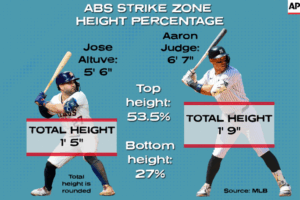 Robot umpires are getting called up to the big leagues next season. Major League Baseball’s 11-man competition committee on Tuesday approved use of the Automated Ball/Strike System in the major leagues in 2026. Human plate umpires will still call balls and strikes, but teams can challenge two calls per game and get additional appeals in extra innings. Challenges must be made by a pitcher, catcher or batter — signaled by tapping their helmet or cap — and a team retains its challenge if successful. Reviews will be shown as digital graphics on outfield videoboards. Robot umpires approved for MLB in 2026 as part of challenge system | AP News
 The New York Mets, with Juan Soto’s record $61.9 million pay, led MLB for the third straight opening day with a $322.6 million payroll (down from their record high of $355.4 million in 2023), just ahead of the World Series champion Los Angeles Dodgers at $319.5 million. Those two teams each spent roughly five times as much as the Miami Marlins, who at $64.9 million ended the Athletics’ three-year streak as the lowest spender. Los Angeles’ payroll figure was held down by deferred payments. Shohei Ohtani’s $70 million salary was discounted to a present-day value of $28.2 million because it won’t be paid in full until 2035