


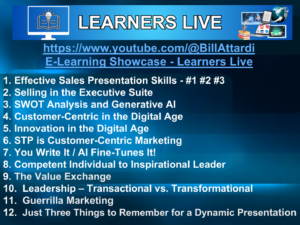
Learners Live

DOE Is Dedicating $17.5 Billion in Loans to the Nuclear Supply Chain by Catherine Boudreau

The low-interest loans are aimed at supporting the Trump’s administration’s push to build 10 large nuclear plants by 2030. DOE’s Office of Energy Dominance Financing plans to provide $17.5 billion in low-interest loans to five projects so they can procure components like pressure vessels, steam generators, and main coolant pumps. All five intend to build Westinghouse AP1000s — the nation’s flagship nuclear reactor. EDF Director Gregory Beard told reporters that the office hasn’t selected the projects yet, but at least seven utilities and energy companies have formally expressed interest in the program. To further support the U.S. nuclear buildout, the Trump administration is also trying to build up a domestic supply of nuclear fuel — another major bottleneck in bringing new plants online. DOE is dedicating $17.5 billion in loans to the nuclear supply chain | Latitude Media
US Energy Department Reorganization Signals Major Policy Shift to Nuclear and Gas

The U.S. Department of Energy (DOE) has announced a significant shift in its energy policy, moving away from renewable energy sources like solar and wind and towards baseload power sources such as natural gas and nuclear power. This decision involves the reorganization of nearly $84 billion in loans and conditional commitments, with approximately $9.5 billion in subsidies for wind and solar projects being eliminated. The DOE’s new focus is on supporting the private sector through energy projects that provide consistent power rather than intermittent generation. This shift is part of a broader policy to enhance energy security and domestic production, as outlined by Secretary of Energy Chris Wright. US Energy Department Reorganization Signals Major Policy Shift to Nuclear and Gas → Energy

How AI Is Ushering in a New Nuclear Age

Atomic energy is back, thanks to the ravenous demands of AI, favoritism from Trump, and the zeal of young entrepreneurs raising billions to build mini-reactors. The upside is unlimited. So far in 2025, venture capitalists, stock market investors, billionaires, the DOE and others have poured more than $4 billion into these and other new U.S. nuclear ventures, versus closer to $500 million in 2020, per PitchBook.  Tens of billions more will be needed if nuclear power is to make a comeback. Sure, lots of folks still oppose nuclear reactors, particularly in their own backyard. But support is now both broad-based and top-down. The Nuclear Power Entrepreneurs Getting Rich From AI

US Aims to Build $80bn Worth of New Nuclear Power Plants by Neil Gerrard

The US government has struck up a partnership with the Canadian owners of Westinghouse Electric as part of a plan to build at least $80 billion worth of new nuclear reactors. Westinghouse Electric’s owners, Canada-based Cameco, which supplies uranium and nuclear fuel services, and Brookfield Asset Management, confirmed the strategic partnership to accelerate the deployment of nuclear power in the US. he US government is expected to arrange financing and secure permits for the new nuclear plants in return for a 20% share of future profits, after Westinghouse has paid out profits of $17.5 billion to Brookfield and Cameco. A national deployment of the reactors could generate 100,000 construction job.  US aims to build $80bn worth of new nuclear power plants – Construction Briefing

Nuclear Power Could Be a $10 Trillion Industry That ‘Holds the Answer to the World’s Power Shortages’

Nuclear energy represents a $10 trillion potential market opportunity that could hold “the answer to the world’s power shortages,” according to a new report from Bank of America. To meet the growing demand for global electrification stoked by energy-intensive projects like the data centers underpinning the AI arms race, global nuclear capacity will have to triple by 2050, the firm estimated. Investment is expected to reach more than $3 trillion in the next 25 years. Small Modular Reactors, or SMRs are typically designed to produce around 500 megawatts or less of energy compared to a traditional nuclear power plant’s 1,000 MW or more. Unlike traditional nuclear power plants that may take years — if not decades — to bring online, SMRs are cheaper and faster to build, with “modular” parts that can be mass-produced and slotted together on an assembly line.  Nuclear power could be a $10 trillion industry that ‘holds the answer to the world’s power shortages’

DOE Announces Accelerated Siting of Data Centers

Oak Ridge National Laboratory (ORNL) and Elementl Power have teamed up to advance a data-driven siting approach for advanced nuclear projects. The work started through a U.S. Department of Energy (DOE) GAIN voucher and contributed to Elementl’s recent agreement with Google to prepare three U.S. sites for advanced nuclear deployment. Each site would have at least 600 megawatts of capacity and would likely be used to power large-scale data centers. Nuclear energy can provide around-the-clock abundant and reliable electricity, making it an attractive solution to meet rising energy demand from AI and data centers. Google will provide early-stage capital to develop three sites for advanced reactor projects with final technology selection and site confirmation pending further development milestones. DOE Announces Accelerated Siting of Data Centers – electrifiED

N.J. Explores Nuclear Strategy for Energy Goals

 New Jersey is projected to need as much as 10 gigawatts of clean, firm energy capacity by 2035 to maintain system reliability and meet the state’s clean electricity goals. The New Jersey Board of Public Utilities has initiated a request for information to evaluate the possible role new nuclear power plants could have in meeting the state’s energy objectives. The RFI seeks insights into how nuclear can support growing energy demands, particularly from large consumers like AI data centers.  New Jersey BPU eyes potential for new nuclear | Utility Dive

The Push to Triple Global Nuclear Energy by 2050

In recent years, the world has faced unprecedented growth in energy demand caused by digitalization, the development of artificial intelligence, electric vehicles, and other energy-consuming technologies. In an attempt to handle this challenge, Amazon, Meta, and Google — top stock gainers during previous years — as well as 14 leading banks and financial institutions, energy suppliers, and representatives of heavy industry, have joined forces to achieve the ambitious goal of tripling global nuclear power capacity by 2050. The World Nuclear Association initiated this program — for the first time, companies not directly involved in nuclear energy have publicly supported scaling nuclear power plants to meet their needs.  Powering the Future: The Push to Triple Global Nuclear Energy by 2050 – Programming Insider

DOE Green-Lights $57M Loan to Restart Michigan Nuclear Plant by Francisco “A.J.” Camacho

The Department of Energy has approved a $57 million loan disbursement to restart the Palisades Nuclear Plant in Michigan, marking the first financial commitment from the Trump administration for nuclear revival. DOE’s disbursement is part of an existing $1.52 billion loan guarantee aimed at restoring the 800-megawatt facility, which, if successfully restarted, would be the first U.S. commercial nuclear reactor to resume operations after being shut down. DOE green-lights $57M loan to restart Michigan nuclear plant – E&E News by POLITICO

Will Nuclear Power Be the Answer for Data Centers’ Voracious Energy Needs? by John Caulfield

The need to balance energy demands with carbon footprint reduction goals is motivating Big Tech companies to explore nuclear as an alternative power source. That is what’s motivating Big Tech companies—which pumped more than $180 billion into data center expansions and related infrastructure in 2024, according to the research firm Dell’Oro Group—to turn to nuclear as a future alternative power source. Several companies have struck strategic investment agreements to secure their access to this cleaner power, and to support the development and potential commercialization of advanced nuclear reactors. Will nuclear power be the answer for data centers’ voracious energy needs? | Building Design+Construction

Interesting: The Three Pillars of Independence of an Organization

The 3 Pillars of Independence most commonly refers to a framework from the UK voluntary sector (specifically promoted by organizations like Bond and the Directory of Social Change). It is a toolkit for assessing and maintaining the independence of charities, NGOs, or civil society organizations.

The Three Pillars are:

  1. Independent of Party Politics – The organization (or regulator) must remain free from bias or influence by any political party or the government of the day. Decisions should be impartial, not favoring one political side.
  2. Independent of Populism – It should not be swayed by popular public opinion, media-driven campaigns, or transient public pressure, especially on controversial or unpopular causes.
  3. Independent of the Press – Freedom from media influence or pressure, ensuring decisions are based on evidence and law rather than headlines or public narratives.

This toolkit was created to monitor potential political encroachment on charitable regulation and to ensure charities can operate without undue external interference.


Check out the learning sessions we posted…

August Blog: Learning to Get Better by Bill Attardi

WE ARE NOW LIVE ON YOUTUBE: https://www.youtube.com/@BillAttardi