


Learners Live

Blue Energy Raises $380M to Build Grid-Scale Nuclear Reactors in Shipyards

As the grid strains under the weight of electrification and AI data centers, tech companies and utilities have been evaluating whether nuclear power can help with the burden. Blue Energy wants to build nuclear reactors in shipyards because these locations can handle large amounts of steel and can be easily shipped to the project site once completed. Once the reactor and other parts are completed in the shipyard, the company plans to move them to the installation site via barge. Though that limits the total number of sites Blue Energy can address, the company can still use rivers to reach deep into the U.S., Europe, Africa, and Asia. Blue Energy raises $380M to build grid-scale nuclear reactors in shipyards | TechCrunch
DOE Explores Using Its Lands for Data Centers

The U.S. Department of Energy (DOE) is helping ensure America leads the world in Artificial Intelligence (AI) while helping to lower energy costs by co-locating data centers and new energy infrastructure on DOE lands. To support this effort, DOE’s Office of Policy released a Request for Information (RFI) to inform possible use of DOE land for artificial intelligence (AI) infrastructure development to support growing demand for data centers. DOE has identified 16 potential sites uniquely positioned for rapid data center construction, including in-place energy infrastructure with the ability to fast-track permitting for new energy generation, such as nuclear.

View the full PDF RFI.   DOE Explores Using Its Lands for Data Centers – electrifiED

DOE Taps TVA, Holtec for $800M in Early SMR Deployment Funding

The U.S. Department of Energy (DOE) announced the selection of the Tennessee Valley Authority (TVA) and Holtec Government Services to support early deployments of advanced light-water small modular reactors (SMRs) in the United States. The project teams will receive up to $800 million in federal cost-shared funding to advance initial projects in Tennessee and Michigan, while also facilitating additional follow-on projects and associated supply chains. . “President Trump has made clear that America is going to build more energy, not less, and nuclear is central to that mission.” DOE taps TVA, Holtec for $800M in early SMR deployment funding

US, Saudi Arabia Agree on Energy & Critical Mineral Deals

The MOU also highlights the intent to collaborate in various fields including petroleum refining and refined products trading, electricity generation technologies and energy storage systems, and artificial intelligence projects to accelerate deployment of energy-driven innovations. The two sides also outlined areas for cooperation on civil nuclear energy, including safety, security, and nonproliferation programs; vocational training and workforce development; U.S. Generation III+ advanced large reactor technologies and small modular reactors; uranium exploration, mining, and milling; and safe and secure nuclear waste disposal.  The signings coincided with President Trump’s announcement that he secured a $600 billion investment commitment from Saudi Arabia.  US, Saudi Arabia Agree on Energy & Critical Mineral Deals – electrifiED

Interesting: The Three Pillars of Independence of an Organization

The 3 Pillars of Independence most commonly refers to a framework from the UK voluntary sector (specifically promoted by organizations like Bond and the Directory of Social Change). It is a toolkit for assessing and maintaining the independence of charities, NGOs, or civil society organizations.

The Three Pillars are:

  1. Independent of Party Politics – The organization (or regulator) must remain free from bias or influence by any political party or the government of the day. Decisions should be impartial, not favoring one political side.
  2. Independent of Populism – It should not be swayed by popular public opinion, media-driven campaigns, or transient public pressure, especially on controversial or unpopular causes.
  3. Independent of the Press – Freedom from media influence or pressure, ensuring decisions are based on evidence and law rather than headlines or public narratives.

This toolkit was created to monitor potential political encroachment on charitable regulation and to ensure charities can operate without undue external interference.


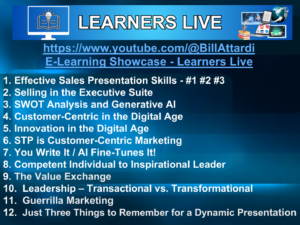
Check out the learning sessions we posted…

August Blog: Learning to Get Better by Bill Attardi

WE ARE NOW LIVE ON YOUTUBE: https://www.youtube.com/@BillAttardi