Landscape Forms Announces Urbidermis’ Redesigned Candela Outdoor Lighting

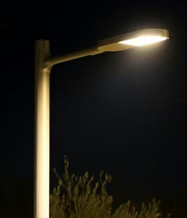
Building on the original 2009 design, this lighting option is now more flexible and lighter weight. Landscape Formshas released Candela, redesigned by urbidermis. This evolution of Gonzalo Milà’s 2009 design now features enhanced performance and adaptability, with high pressure cast aluminum housing that provides a lighter weight construction and anodized finishes and stainless steel hardware that can withstand demanding environmental conditions. A new steel and aluminum pole option adds structural flexibility, while an optional house-side shield minimizes backlight. Outdoor Site Furnishings and Lighting for… – Landscape Forms
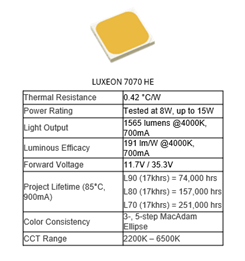 Lumileds’ newest LUXEON 7070 HE delivers more than 1500 lumens and over 190 lm/W, simplifying the development of outdoor lighting applications that require very high light output levels, such as high-mast, high-bay, and flood lights. LUXEON 7070 HE is tested and specified at 8W and delivers 2500 lumens at its rated power of 15W. LUXEON 7070 HE is available in both 12V and 36V packages and is hot color targeted for 85°C for color accuracy and consistency. At 700mA, 4000K LUXEON 7070 HE delivers typical 1565lm and 191 lm/W.
  Introducing the US LED’s Night Guard series of LED flood lights, the ultimate solution for versatile outdoor lighting. The Night Guard series offers field-adjustable CCT and wattage options, allowing custom illumination for project needs. Installers can choose from 3,000K to 5,000K, creating a warmer tone for a welcoming atmosphere or enhancing visibility with a daylight setting for security. The integrated photocell ensures automatic dusk-to-dawn operation, providing worry-free lighting control and additional energy savings. Engineered with specialized optics, the Night Guard series delivers precision lighting for any application, from security areas to exterior facades and offers multiple mounting accessories for maximum effectiveness. Embrace the perfect blend of performance, adaptability, and convenience with Night Guard LED flood lights.