RAB H17 UFO LED High Bay

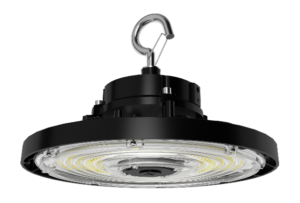 The newest generation of the H17 is smaller and lighter than its already-compact original. The smallest body is less than a foot in diameter, and the entire family delivers incredibly high output, replacing up to 1000W MH while boasting even higher efficacy than before…all at a rock-bottom price. The H17 includes an expansion port that makes it easy to screw on standard or Lightcloud Blue-enabled passive infrared (PIR) and microwave (MVS) sensors, which can be configured to adjust brightness and hold time, saving additional energy and costs. A remote is also available for an additional level of control. H17B – RAB Lighting Spec sheet: H17B
 Engineered for harsh-environment applications, the HAZPAN can withstand use in the presence of flammable vapor, gases, and ignitable dust/fibers. They’re built for use in marine and hose-down environments, and ideal for manufacturing plants, chemical facilities, loading docks, and paper mills. The HAZPAN is offered in 1×4, 2×4, and 2×2 models, each available in two wattages and a bright 5000K for maximized visibility. Battery backup is available for all three sizes. The HAZPAN comes standard with both suspension chains and ceiling mount brackets out of the box, with aircraft cable tethers included for additional support. A mounting kit is also available for recessed use in a ceiling or grid. Available as a separate accessory, the HAZMVS is a microwave sensor engineered for hazardous location use.