Learners Live

Lutron Releases 2026 Luxury Residential Trend Report

Lutron Electronics has released its Luxury Residential 2026 Trend Report: Living with Light, providing an in-depth look at emerging trends in residential lighting, automated shades, and controls. Informed by custom surveys from The Harris Poll driven by insights from high-net-worth homeowners and residential designers and architects, as well as Lutron sales and product data, the report highlights how lighting, shading, and controls are now central to both the aesthetic and emotional experience of a home. The report strongly signals that homes are increasingly prioritizing mood, wellness, and personalization. Motorized shades and app-controlled lighting are shifting from luxury upgrades to expected design essentials, while layered, tunable light is foundational to creating spaces that feel human, flexible, and attuned to the rhythms of daily life. Key findings:

  • Lighting as the Heart of the Home
  • The Shift Toward Dynamic, Tunable Light
  • The Evolution of Window Treatments
  • Customization, Personalization, and Materials
  • Smart Controls Complete the Design and the Experience

Download the complete report in PDF format: Lutron 2026 Trend Report – Dropbox
Commercial Construction Soars in September

Total construction starts were up +3.1% in September to a seasonally adjusted annual rate of $1.26 trillion, according to Dodge Construction Network. Nonresidential building starts rose by +11.9%, residential starts improved +3.6%, and nonbuilding starts fell -6.2% over the month. On a year-to-date basis through September, total construction starts were up +3.5% from last year. Nonresidential starts were up +5%, residential starts were down -4.2% and nonbuilding starts were +10.8% higher over the same period. For the 12 months ending Sept. 2025, total construction starts were up +6.7% from the 12 months ending Sept. 2024. Residential starts were down -1.4%, nonresidential starts increased 6.8%, and nonbuilding starts were up +16.7% over the same period.  Commercial Construction Soars in September | Electrical Wholesaling

Lighting Revolution in Two Graphs: LED Distribution In Residential And Commercial Applications by Craig DiLouie

As the LED revolution achieves increasing adoption, a recent report by the Department of Energy illuminates the growth. Published in April 2024, the “2020 U.S. Lighting Market Characterization” https://tinyurl.com/3fczwe9s estimates technology distribution among the U.S. installed base of units (lamps/luminaires), along with energy consumption. Residential sector: Let’s start with the residential lighting sector, where an estimated 6.5 billion units are installed, accounting for 80% of lighting installations. LED was the most popular light source in 2020 with 3.1 billion units installed or 48% of the total, nearly 50% less energy than in 2015.  Commercial buildings: In the commercial building sector, with its estimated 1.6 billion installed units, we see a similarly striking snapshot of LED earning virtual parity with other light sources. In 2020, LED reached an overall share of 48% of the installed base and a rough parity with fluorescent, nearly 30% less energy than 2015 and 57% less than 2001. Again, LED adoption is today the majority light source in commercial buildings.  Lighting Revolution in Two Graphs: LED distribution in residential and commercial applications – Electrical Contractor Magazine

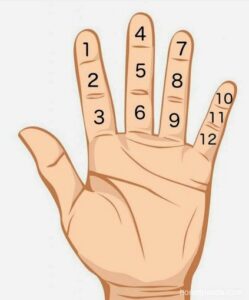
Telling Time – 12-hour time is a very ancient system that traces back to the Mesopotamian empires. They had a cultural fixation with the number 12, used a base-12 numerical system, and divided up most things into 12ths whenever possible – including day and night. The 12 hours of day and 12 hours of night system spread throughout Europe and the Middle East and has defied multiple attempts to change it over the centuries. Also, for anyone curious as to why there was such a love of the number 12, it was because that was how they counted on their hand. Look at your hand. Notice how each of your fingers minus your thumb has three easily identifiable parts to it. They used to count by using their thumb to count each part of the finger, much in the same way we count to 10 using our fingers today. So, 12 was the max you could count on one hand.