How AI Is Rewiring Electrical Operations by Satish Jayaram

Electrical professionals are facing a convergence of challenges unlike anything the industry has seen in decades. Demand for power is rising, infrastructure is aging, extreme weather events are becoming more frequent, and energy costs are increasingly volatile and difficult to predict. At the same time, industrial processes, data centers, health care facilities, and other critical operations have become far less tolerant of power disruptions and quality issues. What might have been a minor disturbance a decade ago can now result in significant operational, financial, or even safety consequences. Many organizations view AI primarily as an automation tool. In my experience, its greatest value in electrical operations is helping facilities make better decisions about reliability, resiliency, and energy economics. As sensors become more pervasive and computing power continues to expand, AI is enabling organizations to move beyond reactive maintenance and siloed decision-making toward operations that are more predictive, connected, and resilient. How AI Is Rewiring Electrical Operations | EC&M
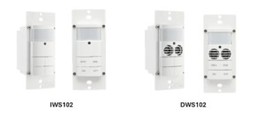 The Keilton+autani IWS102/DWS102 by LiteTrace Brands transforms standard wall switches into intelligent control hubs that manage both hardwired lighting and networked devices based on occupancy, without requiring ceiling-mounted sensors or fixture modifications. Unlike typical occupancy sensors that only control their hardwired load, the IWS102/DWS102 offers dual control architecture: hardwired occupancy-based switching for connected lighting plus wireless Bluetooth control of additional networked loads. The integrated 4-button interface provides manual dimming and On/Off control while occupancy functions operate independently. A single wall-mounted sensor orchestrates lighting and equipment control across an entire room through the Keilton+autani Bluetooth network, including plug load controllers (WF20R) for appliances and equipment. Ideal for conference rooms, private offices, lunch rooms, storage areas, copy rooms, and restrooms where coordinated lighting and equipment control maximizes energy savings.