


Home Advantage: 80% of Sports Fans Prefer the Sofa to the Sporting Stands

Signify announced new research from Philips Hue and Philips Smart Lighting showing that sports fans1 are swapping packed pubs and crowded stadiums for something far more personal: their homes. 80% of fans admit they’d rather watch from home. The research also indicates that fans are investing time and effort into the at-home experience. Over a third (38%) say they spend up to an hour preparing for kick-off. Setting up snacks (49%), perfecting lighting (35%) and decorating their space (31%) are all undertaken in a bid to create the ultimate atmosphere. Philips Hue and Philips Smart Lighting (connected by WiZ) are introducing Sports Live, a new software designed to help fans create a true “home stadium” atmosphere and experience. With compatible smart lighting, Sport Live can bring matches to life beyond the screen – from a dramatic kick-off countdown to flashes of color for key moments, including goals, yellow and red cards, set pieces and penalties. The result is a fully immersive experience that allows fans to not just watch the game, but to feel part of it. As a summer of sport kicks off, Philips Smart Lighting is helping fans turn every match into an experience, transforming living rooms into front-row seats, and everyday viewing into something far more powerful. https://www.ledinside.com/news/2026/6/2026_06_30_01
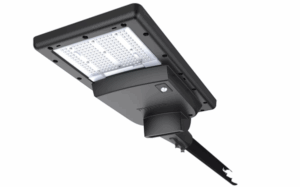 Signify, the world leader in lighting, introduces four new products – the Signify SunStay Pro gen2 and SunStay Pro gen2 mini, Signify GreenVision Xceed Pro and Signify Actistar – highlighting the company’s advances in solar and modular streetlighting as well as performance lighting for stadiums.
 Lightolier 3D Crown Series Small Track, from Signify’s Genlyte Solutions business was developed for retail, gallery and restaurant applications. The luminaire offers spec-grade performance, with interchangeable optics and accessory compatibility; a sleek, compact design (2-in. aperture) that’s easy to specify; excellent lumen maintenance for more consistency over time; sustainable 3D printing production; and eight different color options (with the possibility to mix and match the rim colors, too) to suit the interior design. The fixtures are made from 55% recyclable polycarbonate and are designed to support circularity at end of life. The Lightolier 3D Crown Series Small Track is scheduled for commercial release on Sept. 27.