SpaceX Wants to Blast Data Centers Into Orbit. Here’s What It May Take by Claire Hogan

Earlier this year, SpaceX filed an application with the FCC petitioning to launch up to a million satellites as part of an “orbital data center.” It has also become a big part of Elon Musk’spitch to investors ahead of his massive SpaceX IPO. We asked an engineer to break down the biggest technical hurdles and costly barriers to putting data centers in space. Watch the video to see what it would actually take to make it work. SpaceX Wants to Blast Data Centers Into Orbit. Here’s What It May Take. – WSJ
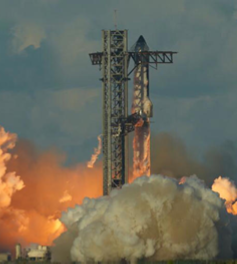 Elon Musk recently announced what seemed like an odd pairing of his companies: SpaceX was acquiring xAI, the artificial intelligence firm that also owns the social media platform X. The merger combines a highly profitable rocket company with an AI startup that is burning through billions of dollars as it competes with OpenAI and other rivals for dominance in artificial intelligence. The merged companies are valued at $1.25 trillion. That is higher than recent separate valuations of SpaceX at $800 billion and xAI’s holding company at $230 billion. IPO shares are expected to price at roughly $525. Aside from the financial benefits, there are technical reasons. Musk has sketched out a futuristic plan that involves sending up to a million satellites — called data centers — into an orbit, where the sun could power them all day and night while they do artificial intelligence computations.
  SpaceX CEO Elon Musk called reports of a planned IPO by SpaceX “accurate” on X, setting the stage for what could be a massing financial infusion for the company. Analysts are speculating the IPO could draw at least $800 billion to the company. Musk says a key strategy for SpaceX will include data centers in space, and the IPO will help fund the potential project. The per share price is expected to begin at $421. If the IPO happens next year, it could make SpaceX the most valuable company in the world.