


Learners Live

Updated DLC Qualified Products List Streamlines the Search of Rebate-Eligible Lighting by Jason Jeunnette

The DLC’s enhancements to the SSL QPL now enable contractors to easily identify rebate-eligible products with precise control features. Just as LED technology turbo-charged lighting sector energy savings 15 years ago, controls are now poised to take lighting savings to a whole other level. A 2020 studyby DLC showed that adding networked controls to LED lighting projects can boost energy savings by an average of about 50% across various building types. Follow up research in 2023 illustrated even greater savings opportunities through integration of lighting controls with HVAC – a practice the study showed could reduce a building’s HVAC energy usage by 30% and potentially cut whole building energy consumption by up to 20%. The DLC’s recently updated Solid-State Lighting (SSL) Technical Requirements and Qualified Products List (QPL) address one crucial barrier to wider controls adoption – the time and effort required to find luminaires that have integral controls capabilities tailored to specific project needs and can also earn valuable rebates and incentives. Finding listed products is simple — just create a free myDLC account. Updated DLC Qualified Products List Streamlines the Search and Selection of Rebate-Eligible Lighting with Specific Controls Capabilities | EC&M
Final Version of DesignLights Consortium’s New Technical Requirements for LED Lighting Released

The SSL V6.0 and LUNA V2.0 Technical Requirements are now combined in a single set of technical requirements and scheduled to take effect in January.

Key updates to SSL V6.0 include:

  • A major revision to the DLC Premium product classification for luminaires with higher efficacy thresholds and more rigorous requirements for controllability, expanding the classification to further enable incentives for advanced controls and integrated building systems.
  • Provisions to drive wider adoption of controls through compatibility-based product selection from the SSL and Networked Lighting Controls (NLC) QPLs.
  • Expanded SSL QPL eligibility to support sustainability, lighting innovation and flexible installation practices.
  • Clear criteria and improved documentation for manufacturers and specifiers.

Overall, the new technical requirements for LED lighting maintain an average increased efficacy threshold across all DLC qualified product types of 14 percent (with some product efficacy increases as high as 19 percent). At the same time, recognizing that efficacy must accompany quality to support long-term energy savings and user satisfaction, SSL V6.0 includes efficacy allowances for products that meet higher quality of light thresholds in terms of features such color rendition and glare control. Full details of SSL V6.0 and LUNA V2.0 are available the DLC’s website 

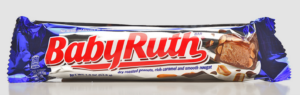
The Creator of Baby Ruth Actually Sued Babe Ruth –The Baby Ruth candy bar was created by the Curtiss Candy Company in 1920 — the same year that baseball legend Babe Ruth hit a then-record 54 home runs. But the Great Bambino was irked that the company was selling a candy bar with such a similar name to his own without offering him any royalties. Rather than take the Curtiss Candy Company to court, the Sultan of Swat decided to make his own candy bar, and in 1926 he debuted Ruth’s Home Run bar. The Curtiss Candy Company responded by turning the tables and taking Ruth to court. They accused the slugger of trying to steal their trademark and capitalize on the success of their brand. In a 1931 deposition, Curtiss founder Otto Schnering insisted the candy was named after “Baby Ruth” Cleveland — the daughter of President Grover Cleveland.  He also attested that the company came up with the name in 1919 before the baseball player had become a household name and that the name was merely coincidental. While the validity of those claims is disputed to this day, the court nonetheless ruled in favor of the candy company, forcing Ruth to end his foray into the world of candy.