


The Cost of Replacing Purple LED Streetlights by Lori Lovely

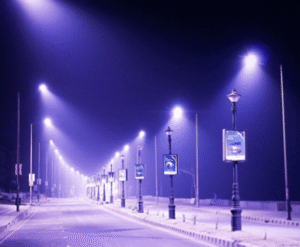 Since many cities and towns began switching to LED streetlights about 15 years ago, a peculiar phenomenon has begun to occur. As specific batches of LED streetlights age, their cool white light fades to blue and then eventually emits a purple wash, due to delamination of the phosphor-silicon layer in some LED chips. This has been linked to a manufacturing defect that eluded quality inspections. Now that the defect has been identified, many municipalities are including performance guarantees and warranties in their street lighting contracts, allowing them to get lamps replaced for free or decreased cost. The average cost of replacing an LED street light fixtures runs from $100 to $500. If only the lamp needs replacing, the cost is around $50 to $200. The cost of replacing the entire fixture can be as much as $400 to $1,200. The Cost of Replacing Purple LED Streetlights – Electrical Contractor Magazine