


Learners Live

Final Version of DesignLights Consortium’s New Technical Requirements for LED Lighting Released

The SSL V6.0 and LUNA V2.0 Technical Requirements are now combined in a single set of technical requirements and scheduled to take effect in January.

Key updates to SSL V6.0 include:

  • A major revision to the DLC Premium product classification for luminaires with higher efficacy thresholds and more rigorous requirements for controllability, expanding the classification to further enable incentives for advanced controls and integrated building systems.
  • Provisions to drive wider adoption of controls through compatibility-based product selection from the SSL and Networked Lighting Controls (NLC) QPLs.
  • Expanded SSL QPL eligibility to support sustainability, lighting innovation and flexible installation practices.
  • Clear criteria and improved documentation for manufacturers and specifiers.

Overall, the new technical requirements for LED lighting maintain an average increased efficacy threshold across all DLC qualified product types of 14 percent (with some product efficacy increases as high as 19 percent). At the same time, recognizing that efficacy must accompany quality to support long-term energy savings and user satisfaction, SSL V6.0 includes efficacy allowances for products that meet higher quality of light thresholds in terms of features such color rendition and glare controlFull details of SSL V6.0 and LUNA V2.0 are available the DLC’s website 
DesignLights Consortium Opens Comment Period for Second Draft of Technical Requirements for LED Lighting: SSL V6.0 & LUNA V2.0

The DesignLights Consortium (DLC) today released the second draft of major updates to its Solid-State Lighting (SSL) technical requirements for indoor and outdoor non-residential LED lighting, as well as revisions to LUNA, a dark sky solution. Draft 2 will have a six-week comment period through September 5.  Reviewers can provide feedback via email to comments@designlights.org using the comment form. The final policy will be released in early November. Other changes in Draft 2 reflect feedback the DLC received from stakeholders relative to clarifying various aspects of the technical requirements. These changes are meant to streamline the qualification process for manufacturers while advancing the essential goals of SSL V6.0 and LUNA V2.0. Full details of all proposed revisions are available on the DLC’s website.

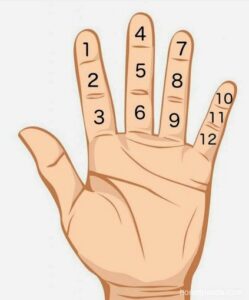
Telling Time – 12-hour time is a very ancient system that traces back to the Mesopotamian empires. They had a cultural fixation with the number 12, used a base-12 numerical system, and divided up most things into 12ths whenever possible – including day and night. The 12 hours of day and 12 hours of night system spread throughout Europe and the Middle East and has defied multiple attempts to change it over the centuries. Also, for anyone curious as to why there was such a love of the number 12, it was because that was how they counted on their hand. Look at your hand. Notice how each of your fingers minus your thumb has three easily identifiable parts to it. They used to count by using their thumb to count each part of the finger, much in the same way we count to 10 using our fingers today. So, 12 was the max you could count on one hand.